

A self care vision board is not about manifesting a fantasy life or pretending everything is fine. It is a tool for orientation. When people feel overwhelmed, burnt out, emotionally flat, or disconnected from themselves, decision-making becomes noisy and reactive. A self care vision board exists to quiet that noise. Its purpose is not motivation, productivity, or aesthetic pleasure. Its purpose is clarity.
Most people are introduced to vision boards through goal culture or social media. They’re often framed as something you make at the start of the year, fill with aspirational images, and then forget about. That approach can feel hollow, especially if you’re already tired or disillusioned with “positive thinking” frameworks that ignore real constraints. A self care vision board works differently. It’s not about who you want to become in an abstract sense. It’s about how you want to relate to your life on a daily basis.
In 2026, more people are turning toward self care vision boards, not because they want more, but because they want less friction. Less emotional noise. Less internal pressure. Less decision fatigue. When built intentionally, a self care vision board becomes a reference point you can return to when you’re unsure about what you need, what to prioritise or what to say no to.
Guide Overview
This guide walks through how to build a self care vision board as a grounded, functional tool rather than a decorative project. You’ll learn how to clarify the purpose of your board, how to identify the areas of self care that actually matter to you, how to choose images and words without getting trapped in perfectionism, and how to use the finished board as a support rather than another obligation. The steps focus on reducing pressure, avoiding aesthetic performance, and creating something that reflects your real needs rather than an idealised version of yourself.
This post may contain affiliate links. If you make a purchase through them, I may earn a small commission at no extra cost to you.
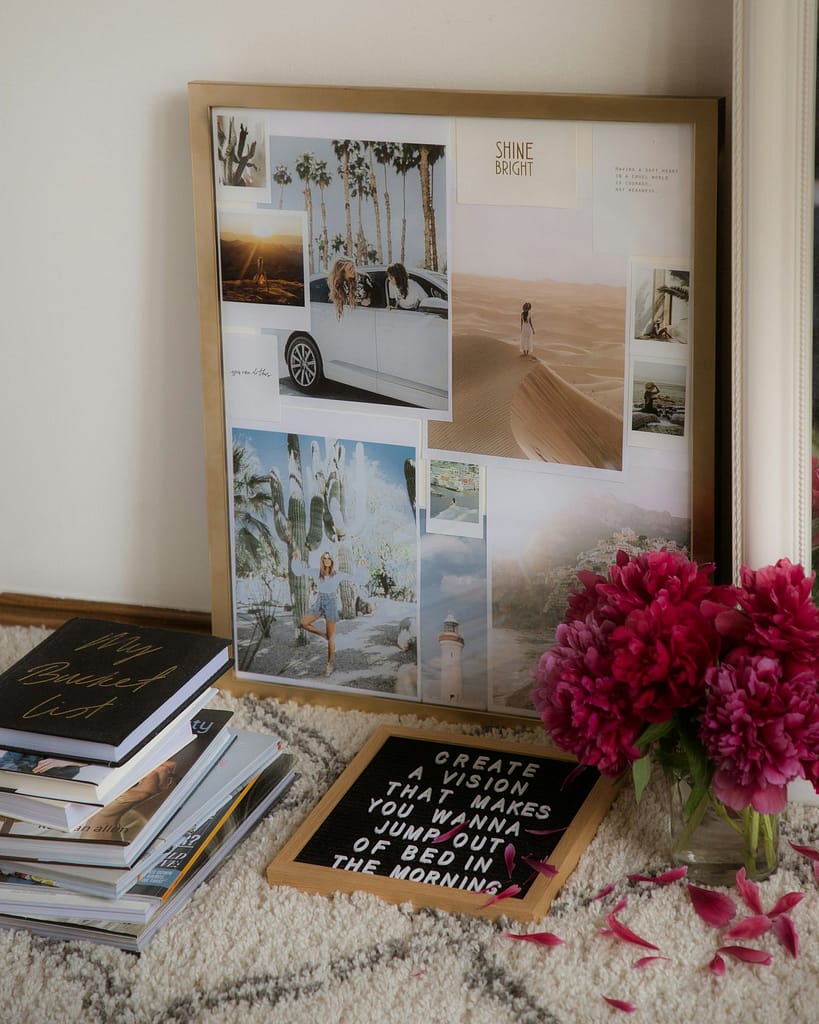
Photo by Jovan Vasiljević on Unsplash
Table of Contents
1. Clarify What the Self Care Vision Board Is For
Before you collect images or open a design app, the most important step is defining the purpose of your self care vision board. Without this, it’s easy to default to cultural ideas of self care that don’t actually apply to you. Many people unconsciously build boards that reflect what they think self care should look like, rather than what would genuinely support them.
Start by asking yourself a few grounded questions. What feels depleted right now? Where do you feel friction in your day-to-day life? What areas of your life feel loud, pressured, or emotionally taxing? A self care vision board should respond to your current reality, not bypass it.
This step is about context. If you are exhausted, your board should not centre discipline or optimisation. If you feel emotionally disconnected, your board might focus on regulation, safety, or rest rather than growth. If you feel overstimulated, your self care vision board may prioritise quiet, simplicity, or containment.
Write a short statement that describes what you want this board to help with. Not what you want to achieve, but what you want it to support. For example, “This self care vision board exists to help me slow down and reduce mental overwhelm,” or “This self care vision board exists to remind me what helps me feel steady during stressful periods.” This statement becomes an anchor for every decision you make later.
2. Define What Self Care Means for You (Not in Theory)
Self care is a term that has been stretched thin. For some people, it means routines and structure. For others, it means permission to stop trying. A self care vision board only works when it reflects your personal definition, not a generic one.
To do this, break self care down into practical categories rather than abstract ideals. Consider areas like physical regulation, emotional safety, mental clarity, environment, boundaries, and rest. You are not required to include all of these. The goal is not completeness. The goal is relevance.
For each category that feels important, ask what actually helps rather than what sounds good. For example, physical self care might not mean workouts or meal prep. It might mean warmth, sleep, or fewer sensory demands. Emotional self care might not mean journaling or affirmations. It might mean fewer conversations, clearer boundaries, or having space to feel without fixing.
If creating boundaries is an important goal for you, you will find helpful insights and tips inside the book Set Boundaries Find Peace. It was the catalyst for me in realising how deep I was into people pleasing behaviours. It also took time to learn how to set boundaries. At first, I made mistakes in understanding how to uphold boundaries, and sometimes I even struggled to honour them. It takes practice, just like with any physical skill, emotional skills need consistent repetition to stick.
Defining self care helps prevent your vision board from becoming aspirational in a way that creates pressure. When people skip this, they often end up with boards that feel distant or performative. When you ground this step in lived experience, the board becomes recognisable rather than idealised.
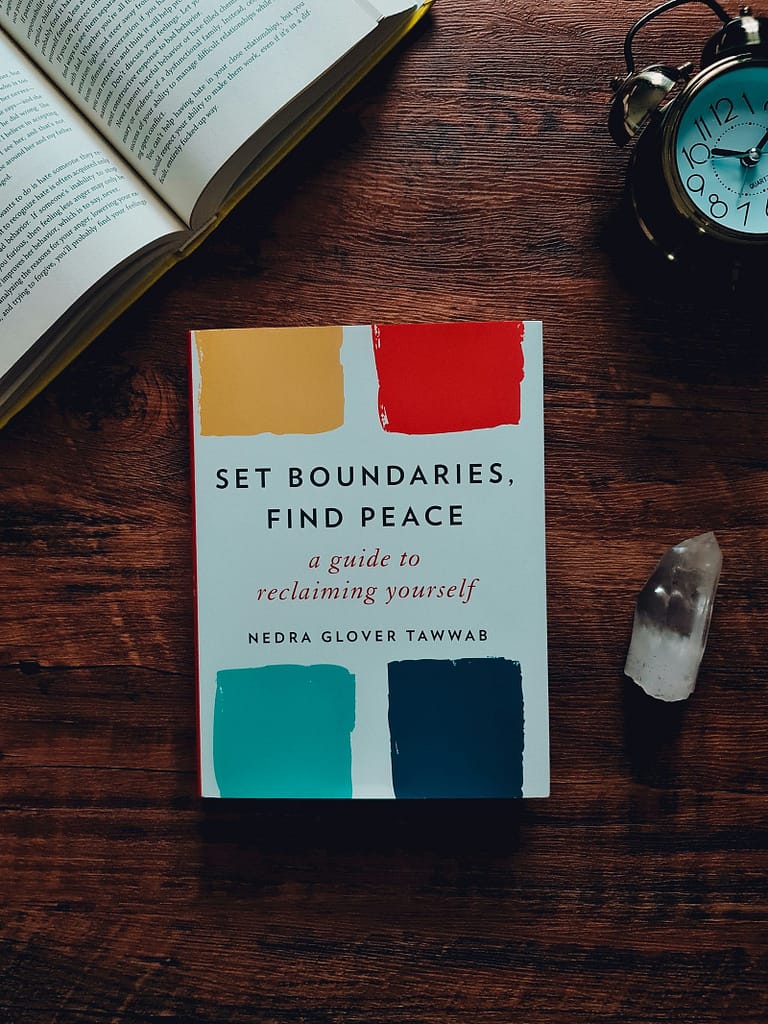
Photo by Edz Norton on Unsplash
3. Gather Visuals Without Performing Aesthetic Perfection
This is where many people get stuck. Vision boards are often treated as creative projects that need to look cohesive, stylish, or impressive. That mindset can quietly undermine the purpose of a self care vision board by shifting the focus from support to performance.
When gathering visuals, prioritise resonance over beauty. An image does not need to be aesthetically pleasing to be useful. It needs to evoke a felt sense of calm, safety, or alignment. This might be a photo of a quiet room, a soft texture, a landscape, a handwritten note, or even a simple colour palette.
It’s not wrong to use aesthetic images either, sometimes it adds to the ambience of our board and makes us feel good when we look at it. If you do need a help and you’re not sure what images to use, you can use a Vision Board Kit as a starting point. The only downside may be that the images don’t fit your vision of how your board should be, so you might end up feeling limited or misaligned with the options.
Alternatively you can try something more well-rounded, like this All-In-One Kit. It comes with cards that display both text and images so you can mix and match them, and easily add it to the card sleeves in the book. It might help reduce decision fatigue about what to do and how to organise your self care vision board. But again, this might not work for you, especially if you want to have more creative freedom over your board. It may work better as supporting material instead.
You don’t even need to go out there and find images, print them, cut them and paste them. You can bring your vision to life from scratch on an empty Canvas by: painting, drawing, sketching or writing what your heart desires. If you still want to use images, you can place them on the Canvas too. Or you could get a Cork Board and pin meaningful things to them instead. There are endless possibilities for your board and there is no right or wrong.
You are allowed to include text instead of images too. Words can be grounding. Phrases like “fewer obligations,” “clear mornings,” or “enough is enough” can carry more meaning than a perfectly styled photo. A self care vision board is not meant to be shared or explained. It only needs to make sense to you.
Limit your sources if possible. Endless scrolling often increases comparison and indecision. Choose one or two places to gather from, whether that’s a folder of personal photos, a magazine, or a short Pinterest session with clear boundaries. If you notice yourself fixating on how it looks rather than how it feels, pause and return to your purpose statement.
4. Assemble the Board as a Reference, Not a Promise
How you assemble your self care vision board matters less than how you relate to it. Whether you’re creating a physical board, a digital collage, or a private note on your phone, the structure should feel accessible rather than precious.
Avoid arranging elements in a way that implies obligation or achievement. This is not a checklist of habits you must maintain. It’s a visual reference that reflects what supports you. Overcrowding the board can recreate the same sense of overwhelm you’re trying to reduce. Fewer elements with clearer meaning are usually more effective.
The whole process of creating a vision board becomes self care if you focus on a few elements because it feels less overwhelming to get started and you’re not stressed about trying to include each element. Some handy supporting tools may be:
- Scissors – putting this as number one because we always tend to forget the most basic tools. Cutting paper for my vision board used to feel like a nightmare because I didn’t have a good pair of scissors handy.
- Glue Stick – another essential for pasting that I always forget to buy.
- Blu Tack – I’ve tried a few different methods in the past to create my vision boards. I found blu tack was handy for when I ran out of magnets on a whiteboard (the one time I trialled it).
- Push Pins – if you decide a cork board is the way for you, you’ll need some sturdy push pins for your elements.
Remember, none of these are required, (well maybe the scissors and glue might be essential haha) they just make the process less frustrating if you already have them around.
As you place each item, ask what it represents. An image of a bed might represent rest without guilt. A photo of an empty calendar might represent spaciousness rather than productivity. A self care vision board works when each element has a clear internal logic, even if that logic is invisible to others.
Resist the urge to “finish” the board in a definitive way. It is allowed to evolve. You can remove elements that stop resonating or add new ones as your needs change. Treating the board as flexible reduces perfectionism and keeps it responsive to real life.
5. Use the Self Care Vision Board as a Decision Filter
The value of a self care vision board is not in its creation alone, but in how it’s used. Instead of treating it as something you look at occasionally for inspiration, integrate it as a quiet reference point.
When you’re deciding whether to commit to something, glance at your board and ask whether the decision aligns with what you’ve identified as supportive. When you feel emotionally dysregulated, use the board to remind yourself what helps rather than defaulting to coping mechanisms that increase strain.
A self care vision board can also be used to counter internal pressure. If your board centres rest, simplicity, or boundaries, it can act as evidence against self-critical narratives that push you to do more than is sustainable. Over time, this reinforces self-trust rather than self-control.
This is especially useful during periods of stress or transition, when it’s easy to lose sight of your needs. The board doesn’t tell you what to do. It reminds you what matters.
Photo by Daniel Ingersoll on Unsplash
6. How a Self Care Vision Board Changes Decision-Making Over Time
One of the least talked about functions of a self care vision board is how it quietly reshapes decision-making. Not immediately, and not dramatically, but through repetition. When you repeatedly see representations of what supports you, your brain starts using that information as a baseline rather than an exception.
Over time, this changes the internal dialogue that happens before you say yes to something, push yourself further, or override discomfort. A self care vision board doesn’t give you answers, but it reduces the number of decisions that feel ambiguous. It helps you recognise when something is misaligned before you’ve already committed to it.
This effect is subtle. You may notice yourself hesitating before agreeing to plans that would previously feel automatic. You may find it easier to choose rest without justifying it. These shifts don’t come from motivation or discipline. They come from familiarity. The board makes your needs visible often enough that they stop feeling negotiable.
7. Using the Board During Low Capacity Periods
A self care vision board becomes most valuable during periods of low capacity. When energy is limited, cognition narrows and access to reflective thinking decreases. This is when people are most likely to abandon self care tools entirely, not because they don’t care, but because the tools themselves require effort.
During these periods, the board functions as a shortcut. Instead of asking yourself what you need, you can look and be reminded. Instead of reasoning your way out of rest, you can visually reconnect with why rest matters to you in the first place.
Importantly, the self care vision board does not require action in these moments. It does not demand behaviour change. Its role is orientation. Even brief exposure can reduce internal conflict by reaffirming what you’ve already identified as supportive.
This is why boards that are overly complex or aspirational tend to fail during stress. A self care vision board that reflects realistic support remains accessible when capacity drops. It acts as a symbol of hope and sometimes even your “why”.
8. What a Self Care Vision Board Is Not Meant to Do
Clarity also comes from understanding what a self care vision board is not meant to do. It is not a substitute for boundaries, communication, or structural change. It will not fix environments that are consistently overwhelming or relationships that disregard your needs.
The board does not remove responsibility or discomfort. Instead, it helps you interpret discomfort more accurately. It distinguishes between growth-related strain and depletion-related strain. This distinction is critical, especially for people who are used to pushing through signals from their body.
A self care vision board should also not become another measure of self-worth. If you find yourself judging how often you look at it or how well you “follow” it, that’s a sign it’s being misused. Its purpose is support, not compliance.

Photo by Peter Nelson on Unsplash
9. Common Mistakes That Make Vision Boards Ineffective
Even with good intentions, a self care vision board can become less effective when it’s shaped by trends, aesthetics, or other people’s goals. When the vision isn’t truly yours, it’s harder to feel guided by it.
Another mistake is treating the board as static. Needs change. Capacity changes. A self care vision board that never evolves can start to feel irrelevant or even frustrating. This doesn’t mean it was wrong to begin with. It means it has done its job for one phase.
A third issue is using the board only when things are already calm. The board is most helpful when it’s integrated into daily life, not reserved solely for moments of reflection. Visibility matters more than intention.
10. Letting the Board Inform Identity Without Freezing It
Over time, a self care vision board can influence how you see yourself. This can be helpful when it reinforces values like rest, clarity, or self-respect. However, it’s important that the board informs identity without fixing it in place.
You are not required to live up to the board. The board reflects needs, not ideals. If you notice tension between who you are and what the board represents, treat that tension as information. It may indicate a change in circumstances, not a personal failure.
A self care vision board works best when it remains descriptive rather than prescriptive. It describes what supports you. It does not dictate who you must become.
11. When to Step Back From the Board Entirely
There may be periods when you don’t engage with your self care vision board at all. This is not a problem. Sometimes integration happens quietly, without conscious reference. Sometimes your needs are being met through other means.
If the board starts to feel irrelevant, you don’t need to force engagement. You can step away and return later, or not return at all. The value of the board lies in what it supported during the time it was useful.
Letting go without guilt is part of self care as well.
FAQ
Q: Can a self care vision board replace routines or habits?
A: No. It complements them by providing clarity, but it doesn’t replace structural supports.
Q: What if my self care vision board reflects needs I can’t meet right now?
A: That doesn’t invalidate the board. It can still help you recognise limits and avoid further depletion.
Q: Is it okay if my board feels emotionally neutral rather than inspiring?
A: Yes. Neutrality often indicates accuracy rather than lack of depth.
Q: Can I have more than one self care vision board?
A: Yes. Some people create boards for different contexts or phases.
Q: How do I know if the board is “working”?
A: If it reduces internal conflict or decision fatigue, even slightly, it’s doing its job.
What’s Next?
Once your self care vision board is complete, you don’t need to act on it immediately. Let it exist. Over time, you may choose to pair it with practices that support regulation or clarity, such as a calm morning routine or tools that reduce overstimulation. The board’s influence often unfolds gradually rather than through deliberate effort. If you are interested in integrating self care into your routines, then you may also find my post How to Have a Calm Morning Routine useful as a starting point on how to build slow and gentle habits for your daily life.


