
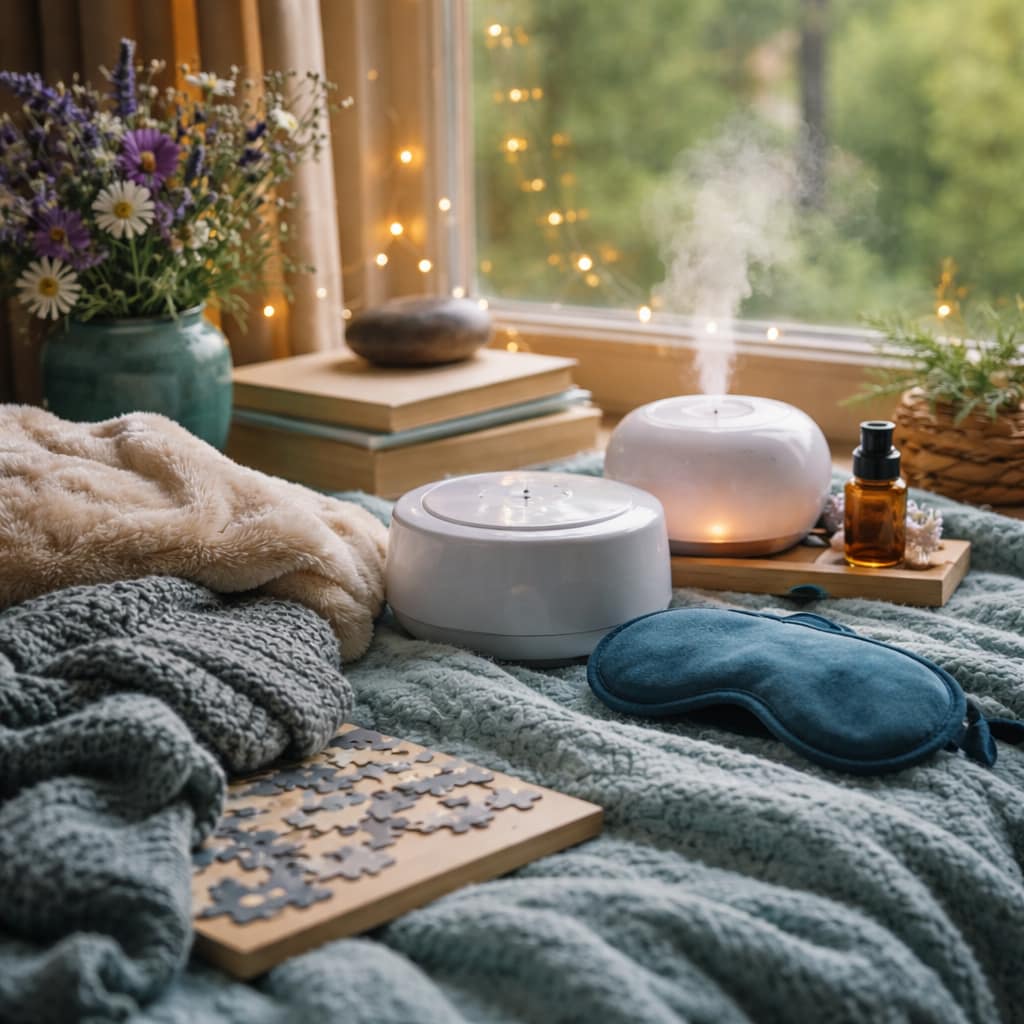
This guide focuses on practical, physical tools that help calm an overstimulated mind by reducing sensory load rather than adding more tasks to your day. These are not productivity hacks or wellness promises. They are supportive items that make it easier to feel grounded, regulated, and safe enough to rest or function at a gentler pace. While overstimulation often overlaps with anxiety, this article is not about diagnosing or treating anxiety. It’s about support, comfort, and creating small pockets of calm when your mind feels overwhelmed.
When your mind feels overstimulated, everything can start to feel louder, faster, and harder than it needs to be. Thoughts overlap, focus fragments, and even simple decisions can feel exhausting. In moments like these, the goal isn’t to fix yourself or push through discomfort. It’s to gently reduce input and create conditions that help your nervous system settle.
The tools below range across different price points and needs. Most are physical items that can be used without much effort, because when you’re overstimulated, even “doing self-care properly” can feel like too much. The intention here is simple: fewer demands, less friction, more ease.
This post may contain affiliate links. If you make a purchase through them, I may earn a small commission at no extra cost to you.

Photo by Matt Kirk on Unsplash
Table of Contents
What is the Best Tool to Calm an Overstimulated Mind?
The best tools to calm an overstimulated mind are those that lower sensory input and support regulation without requiring active concentration or discipline. When mental overstimulation sets in, the nervous system is often already working overtime. Tools that demand focus, planning, or motivation can unintentionally add to the load rather than relieve it.
The products included in this list were chosen based on a few key criteria. First, they reduce stimulation through touch, sound, light, or environmental cues. Second, they are easy to use even on low-energy days. Third, they support calming an overstimulated mind without forcing relaxation or productivity. Finally, they are realistic additions to everyday life rather than specialised or clinical equipment.
No single tool works for everyone. Overstimulation can come from different sources, including noise, light, physical tension, emotional stress, or cognitive overload. That’s why this list includes a mix of sensory supports, environmental tools, and a small number of digital options that require minimal interaction. The aim is not to build a routine, but to offer options you can reach for when your mind feels like it has had too much input.
1. Weighted Blanket
A weighted blanket is one of the most widely recommended tools to calm an overstimulated mind, and for good reason. The gentle pressure it provides can create a sense of physical grounding that helps the nervous system shift out of a heightened state. This pressure is often described as soothing rather than restrictive, which makes it particularly helpful during periods of mental overload.
Weighted blankets are available in a range of weights, fabrics, and sizes. For most people, a blanket that’s around 10 percent of their body weight is a common starting point, but personal comfort matters more than rules. Some people prefer lighter pressure for daytime use, while others find deeper weight helpful in the evenings when overstimulation accumulates.
Pros include improved physical comfort, reduced restlessness, and a feeling of containment when thoughts feel scattered. Cons can include heat retention or discomfort if the weight is too heavy. Prices range from budget-friendly options to higher-end versions with cooling fabrics or removable covers.
To calm an overstimulated mind, a weighted blanket works best when used without expectations. You don’t need to lie perfectly still or fall asleep. Simply resting under the blanket while watching something gentle or sitting quietly can be enough to reduce sensory overwhelm.
2. Heat Pack or Warm Neck Wrap
Warmth is one of the most underrated ways to calm an overstimulated mind. A heat pack or warm neck wrap provides localised comfort that helps muscles release tension and signals safety to the body. When mental overstimulation is paired with physical tightness, especially in the neck and shoulders, warmth can help interrupt that stress loop.
Heat packs come in many forms, including microwaveable wraps, electric heating pads, and reusable gel packs. Neck and shoulder wraps are particularly effective because they target areas where stress often accumulates unconsciously. Some also include light weight, combining warmth and pressure in a subtle way.
The main benefit of heat is how little effort it requires. You don’t have to focus on breathing or mindfulness. You simply apply warmth and let your body respond. This makes heat packs especially useful for people who struggle to calm an overstimulated mind through cognitive techniques alone.
Most heat packs are affordable, widely available, and easy to store. The main consideration is safety, such as avoiding prolonged use or falling asleep with electric options. Used mindfully, warmth can be a powerful, low-effort support during moments of overload.

Photo by Sdf Rahbar on Unsplash
3. Noise-Cancelling Headphones
Sound is a major contributor to mental overstimulation, even when you don’t consciously register it as stress. Background conversations, traffic, appliances or constant digital noise can keep the brain in a state of alertness. Noise-cancelling headphones help calm an overstimulated mind by reducing auditory input without requiring total silence.
Unlike regular headphones, noise-cancelling models actively reduce ambient sound. This can create immediate relief in busy environments or shared living spaces. Some people use them with calming audio, while others prefer wearing them without sound at all to dampen background noise.
Pros include improved focus, reduced sensory fatigue, and greater control over your environment. Cons may include higher price points and the need for charging. There are, however, more affordable options now than in previous years, making this tool more accessible.
For calming an overstimulated mind, noise-cancelling headphones are most effective when used proactively rather than reactively. Putting them on before overwhelm peaks can prevent overstimulation from escalating further.
4. Warm, Low-Light Lamps or Sunset Bulbs
Lighting plays a significant role in how alert or relaxed your nervous system feels. Harsh overhead lighting, especially in the evening, can contribute to mental overstimulation without you realising it. Warm, low-light lamps or sunset-style bulbs help calm an overstimulated mind by softening visual input and supporting a slower pace.
These lighting options emit warmer tones that are less stimulating than bright white or blue light. Many are designed specifically for evening use, helping signal to the body that it’s safe to wind down. Table lamps, floor lamps, salt lamps, or smart bulbs with adjustable warmth all fall into this category.
The benefit of lighting-based tools is that they work passively. Once set up, they don’t require ongoing effort. Simply changing the light in a room can noticeably shift how your body and mind feel within minutes.
Prices vary widely, from inexpensive bulbs to more aesthetic lamp designs. Even one warm light source can make a meaningful difference when you’re trying to calm an overstimulated mind after a long or demanding day.
5. White or Brown Noise Machine
When you’re trying to calm an overstimulated mind, sound can either soothe or intensify what you’re feeling. While silence is often framed as calming, it can actually make internal noise feel louder, especially when thoughts are already racing. White or brown noise machines help calm an overstimulated mind by offering steady, predictable sound that reduces sensory scanning and mental alertness.
White noise distributes sound evenly across frequencies, while brown noise has a deeper, softer quality that many people find more grounding. Both can reduce the impact of background noise without requiring active listening. This makes them particularly helpful in shared spaces, urban environments, or households where constant sound contributes to mental overstimulation.
Dedicated noise machines are often more effective than phone apps because they don’t involve screens, notifications, or decision-making. When your goal is to calm an overstimulated mind, removing the temptation to engage digitally can make a noticeable difference. Many machines also include timers, allowing sound to fade out naturally once your nervous system begins to settle.
Noise machines range from simple, budget-friendly models to more expensive versions with multiple sound options. The most effective choice is usually the one that feels consistent rather than feature-heavy.
6. Eye Mask or Light-Blocking Sleep Mask
Visual stimulation is one of the fastest ways to keep the nervous system activated. When you’re trying to calm an overstimulated mind, even low levels of light can signal alertness and prevent rest. An eye mask reduces visual input immediately, creating a sense of separation from the environment without requiring you to leave the space you’re in.
Eye masks can be used beyond sleep. They’re helpful during daytime rest, while listening to calming audio, or when lying down after a mentally demanding day. For people who experience overstimulation as mental pressure rather than physical fatigue, reducing visual input can make it easier to slow internal activity.
There are many styles available, from soft fabric masks to contoured designs that block light without pressing on the eyes. Some include cooling or gentle pressure, which can further help calm an overstimulated mind by adding subtle sensory regulation.
Eye masks are inexpensive and easy to store, making them a low-effort option for moments when everything feels like too much. They work best when used as a supportive tool rather than a signal that you must sleep or relax perfectly.

Photo by Aditya Saxena on Unsplash
7. Gentle Digital Sound Apps (Low-Interaction)
Although this guide focuses primarily on physical tools, a small number of digital options can support calming an overstimulated mind when used intentionally. The key distinction is minimal interaction. Apps that require tracking, frequent input, or constant choices can increase overstimulation rather than reduce it.
Simple sound-based apps that offer ambient noise, brown noise, or nature sounds can help calm an overstimulated mind when paired with headphones or a speaker. These tools are most effective when you choose a sound once and let it play without further engagement.
Digital sound tools are especially useful when travelling or when physical items aren’t accessible. However, they should be used as replacements for stimulation, not additions. Notifications, visual elements, and excessive options can undermine the calming effect.
When choosing a digital tool to calm an overstimulated mind, simplicity matters more than versatility. Fewer features usually lead to better support during moments of overload.
8. Soft Throw Blanket or Comfort Fabric
Texture plays a quiet but important role in how safe or overwhelmed the body feels. A soft throw blanket or comfort fabric can help calm an overstimulated mind by offering gentle tactile input without the intensity of weight or heat. For some people, softness alone is enough to reduce mental agitation.
Unlike weighted blankets, throws are lighter and easier to use throughout the day. They can be draped over your shoulders while sitting, wrapped loosely during rest, or kept nearby as a physical cue of comfort. This accessibility makes them useful when you want to calm an overstimulated mind without committing to lying down.
Fabric choice matters. Materials like fleece, cotton, bamboo, or brushed microfiber tend to feel soothing rather than irritating. When you’re already overstimulated, rough or scratchy textures can worsen discomfort rather than relieve it.
A soft throw is a low-cost, low-pressure way to calm an overstimulated mind because it supports regulation without requiring stillness or focus.
9. Compression Socks or Gentle Pressure Wear
Gentle, consistent pressure can be grounding during periods of mental overload. Compression socks or light pressure garments help calm an overstimulated mind by providing steady sensory feedback that anchors attention in the body rather than the mind.
Compression socks are particularly useful because they don’t restrict movement and can be worn during everyday activities. The pressure should feel supportive rather than tight. This subtle sensation can reduce restlessness and help interrupt cycles of racing thoughts.
Many people find compression helpful when their overstimulation shows up as agitation or difficulty settling. The physical input can help calm an overstimulated mind without requiring conscious relaxation techniques or mental effort.
Compression wear is available across a wide range of price points and styles. Choosing comfort over intensity is key, as the goal is regulation, not constraint.

Photo by Elric Pxl on Unsplash
10. Minimalist Puzzle or Repetitive Hands-On Activity
For some people, mental overstimulation doesn’t respond well to complete inactivity. When thoughts are loud, doing nothing can make them feel even louder. Minimalist puzzles or repetitive hands-on activities like colouring books; can help calm an overstimulated mind by offering gentle focus without cognitive strain.
Activities like simple jigsaw puzzles, knitting, sorting objects, or other repetitive motions provide a single, neutral point of attention. This can reduce internal noise and allow the nervous system to settle gradually.
Unlike scrolling or multitasking, repetitive hands-on activities tend to lower stimulation rather than increase it. They engage the body just enough to calm an overstimulated mind without introducing performance or productivity pressure.
The effectiveness of these tools depends more on simplicity than quality. When chosen intentionally, repetitive activities can offer relief without requiring rest, sleep, or emotional processing.
11. Aromatherapy Diffuser or Subtle Room Spray
Smell is one of the fastest sensory pathways to the nervous system, which makes it a powerful but often overlooked way to calm an overstimulated mind. A gentle aromatherapy diffuser or subtle room spray can help shift the atmosphere of a space without requiring any mental effort or active participation.
Diffusers release scent gradually, which is often more regulating than strong or sudden fragrances. Scents like lavender, sandalwood, chamomile, or cedarwood are commonly associated with calming effects, but personal preference matters more than any specific recommendation. The goal is not to induce relaxation, but to soften the environment enough to calm an overstimulated mind.
Room sprays can serve a similar purpose, especially for people who don’t want continuous scent or additional devices plugged in. A light mist on bedding, curtains, or clothing can provide brief sensory relief without lingering intensity. This makes them useful during moments of overwhelm when even setting up a diffuser feels like too much.
Both diffusers and sprays vary widely in price and design, from minimal and affordable options to more decorative pieces. When used intentionally and lightly, scent-based tools can support calming an overstimulated mind by reducing sensory sharpness rather than adding stimulation.
Conclusion
When you’re trying to calm an overstimulated mind, the goal isn’t to eliminate stimulation entirely or force yourself into calm. It’s to reduce input, create safety, and allow your nervous system space to settle in its own time. The tools in this guide are meant to support that process, not become another obligation.
Calming an overstimulated mind often starts with doing less rather than more. Whether through warmth, pressure, softer light, steady sound, or reduced visual input, the most effective tools are usually the ones that ask the least of you. You don’t need to use these items consistently or correctly for them to help.
An overstimulated mind isn’t a personal failure or something to fix. It’s a signal that your system has had enough input for now. Having supportive tools within reach can make those moments feel less overwhelming and more manageable, even when life continues to be demanding.


