

Goal setting and productivity are often presented as straightforward skills: decide what you want, plan your time, and stay disciplined enough to follow through. In reality, many people struggle not because they lack motivation or intelligence, but because the systems they are taught to use are misaligned with how energy, focus, and capacity actually work over time.
Burnout is one of the most common outcomes of poorly designed goal setting and productivity strategies. It usually does not happen all at once. Instead, it builds gradually through overcommitment, rigid expectations, and productivity models that reward intensity over sustainability. When goals are treated as obligations rather than guides, even meaningful ambitions can become sources of stress and avoidance.
This post is designed to explain how to approach goal setting and productivity in a way that supports consistency, adaptability, and long-term progress. Rather than relying on motivation or pressure, it focuses on clarity, structure, and systems that can evolve with changing circumstances. The aim is not to do more, but to build a way of working that can be maintained without exhaustion.
Guide Overview
This guide breaks down goal setting and productivity into a practical system you can repeat and adjust over time, rather than a rigid framework you’re expected to follow perfectly. It focuses on building clarity around what actually matters, choosing priorities that fit within real-life capacity, and creating structure that supports consistency instead of intensity.
You’ll learn how to set goals that are specific enough to guide action but flexible enough to evolve as circumstances change, how to plan weekly and review monthly without spiralling or self-criticism, and how to design productivity habits that protect focus, conserve energy, and reduce the risk of burnout. By the end, you’ll have a sustainable approach to goal setting and productivity that supports steady progress over the long term without relying on pressure, guilt, or perfection.
This post may contain affiliate links. If you make a purchase through them, I may earn a small commission at no extra cost to you.

Table of Contents
Reframing What Goal Setting Is Actually For
Goal setting and productivity are often framed as tools for forcing change. Goals are written as demands placed on a future version of the self, with the assumption that enough discipline will eventually make everything work. In this model, productivity becomes something to push through rather than something to design thoughtfully. Over time, this framing turns even meaningful goals into sources of pressure instead of support.
A more sustainable approach to goal setting and productivity treats goals as decision-making tools rather than ultimatums. Instead of asking whether a goal sounds impressive or ambitious, the more useful question is whether it helps clarify priorities. Well-designed goals reduce cognitive load by narrowing focus. They help determine:
- What deserves attention now
- What can wait
- How progress should be interpreted at different stages
When goals function as reference points rather than rigid demands, goal setting and productivity become less about endurance and more about alignment. Productivity shifts away from pushing through resistance and toward removing friction. This reframing matters because without it, even the most carefully planned productivity systems tend to collapse under pressure.
Why Burnout Is Often a Systems Problem, Not a Personal One
Burnout is frequently internalised as a personal failure. When people struggle with consistency, they often assume they lack discipline, motivation, or resilience. Productivity and hustle culture reinforces this belief by glorifying intensity while minimising recovery, flexibility, and context. As a result, difficulties with goal setting and productivity are interpreted as individual shortcomings rather than design flaws.
In reality, burnout is far more often a systems problem. In the context of goal setting and productivity, burnout develops when expectations consistently exceed capacity. This occurs when too many priorities compete for attention, when all goals are treated as equally urgent, or when time and energy are routinely overestimated. Productivity systems that rely on uninterrupted focus or constant self-control may appear effective in theory, but they are fragile in practice.
Real life includes illness, emotional stress, unexpected responsibilities, and fluctuating energy. Sustainable goal setting and productivity systems are designed to absorb these disruptions rather than break because of them. When systems fail repeatedly, the issue is rarely a lack of willpower. It is a mismatch between how the system expects someone to function and how humans actually function over time.
Recognising burnout as a systems issue allows goal setting and productivity to be redesigned without self-blame. Instead of trying harder, the focus shifts toward building structures that can hold under realistic conditions.
The Role of Capacity in Sustainable Goal Setting
Capacity refers to the amount of effort that can be sustained without negative consequences. It includes physical stamina, cognitive focus, emotional regulation, and available time. Capacity is not fixed. It changes based on workload, health, stress levels, and life circumstances. Any approach to goal setting and productivity that ignores capacity is likely to fail.
One of the most common mistakes in goal setting and productivity is planning according to ideal capacity rather than actual capacity. Ideal capacity assumes optimal sleep, stable emotions, uninterrupted time, and consistent motivation. Actual capacity accounts for fatigue, competing demands, and the need for recovery.
When goals are designed around ideal capacity, they often feel achievable on paper but overwhelming in practice. This disconnect creates guilt, avoidance, and eventual disengagement. Aligning goal setting and productivity with real capacity improves follow-through and reduces emotional friction. Productivity becomes a process of working within limits rather than constantly pushing against them.
Understanding capacity also makes it easier to adjust goals without abandoning them. When capacity drops, goals can be changed instead of discarded. This preserves continuity and prevents the all-or-nothing thinking that often undermines goal setting and productivity.
Much of the research around capacity and sustainable effort echoes ideas explored in books such as Four Thousand Weeks by Oliver Burkeman, which challenge the assumption that productivity improves when limits are ignored rather than respected.

Photo by Aron Visuals on Unsplash
Choosing Fewer Goals to Increase Momentum
There is a widespread belief that ambition requires pursuing many goals at once. In practice, spreading attention too thin often leads to stalled progress across all areas. When everything matters equally, nothing receives sufficient focus. This dynamic makes goal setting and productivity feel chaotic rather than intentional.
A more sustainable approach to goal setting and productivity involves choosing fewer goals and organising them hierarchically. Typically, this means identifying one primary goal that receives the majority of attention, supported by one or two secondary goals that progress more slowly. Other interests can remain present without demanding constant effort. It’s often effective to physically write these down, for example in a goal setting planner; so you can have a visual map of all the goals on your list before you categorise them.
This structure improves decision-making. When time or energy is limited, priorities are clear. Productivity becomes deliberate rather than reactive. Fewer goals also make progress easier to evaluate. Instead of constantly feeling behind, it becomes possible to see tangible movement over time within a clear goal setting and productivity framework.
I recently came across Sylvia Plath’s Fig Tree Theory, and it explains this perfectly. In The Bell Jar, Plath describes life as a fig tree, where each fig represents a different possible future. One fig might be a career, another love, another creativity, another stability. The problem is that standing there trying to choose one fig means worrying about all the others you’re not choosing. Over time, that hesitation leads to paralysis, and eventually all the figs rot and fall anyway.
This is exactly what happens when goal setting and productivity become overloaded. When energy is split across too many competing goals, focus scatters and decision-making becomes harder. The fear of missing out on other possibilities can stop action altogether. Choosing fewer goals isn’t a lack of ambition. It’s a conscious decision to direct attention somewhere meaningful, rather than letting it be drained by indecision. In practice, this kind of focus is what actually supports sustained productivity.
Just remember, if one fig doesn’t work out, you don’t need to finish it before choosing another one.
Moving From Rigid Targets to Directional Goals
Traditional goal setting often emphasises specific, time-bound targets. While this approach can be effective in stable environments, it becomes counterproductive when circumstances change. Rigid targets leave little room for adaptation and often trigger all-or-nothing thinking, which increases stress and disengagement.
Directional goals offer a more flexible alternative within goal setting and productivity systems. Rather than focusing on exact outcomes, they define the general direction of effort. Goals such as improving wellbeing, building consistent creative output, strengthening financial stability, or developing professional competence provide guidance without locking progress into a single path.
Directional goals support goal setting and productivity by allowing strategies to evolve. If one approach stops working, another can replace it without invalidating the goal itself. This flexibility reduces pressure and makes long-term engagement more likely.
By focusing on direction rather than precision, goal setting and productivity remain relevant even as circumstances shift.
Shifting the Focus From Motivation to Personal Structures
Motivation is often treated as the engine of productivity. When motivation is high, progress feels effortless. When it drops, productivity stalls. The problem is that motivation is inherently unreliable. It fluctuates based on mood, energy, stress, and external conditions.
Sustainable goal setting and productivity do not depend on motivation alone. They rely on personal structures that make progress possible even on low-energy days. These structures reduce the need for constant decision-making by creating default ways of starting, continuing, and returning to tasks when focus or motivation wavers.
Things like clear starting points, predictable routines, consistent habits and supportive environments all help lower the mental effort required to take action. Over time, these personal structures allow goal setting and productivity to feel steadier and less emotionally demanding, because progress is no longer tied to how motivated you feel in a given moment.
This idea is central to Atomic Habits, which focuses on building small, repeatable habits and environments that support action without relying on willpower. Rather than pushing for motivation, the emphasis is on shaping daily behaviour in ways that make progress easier to sustain.
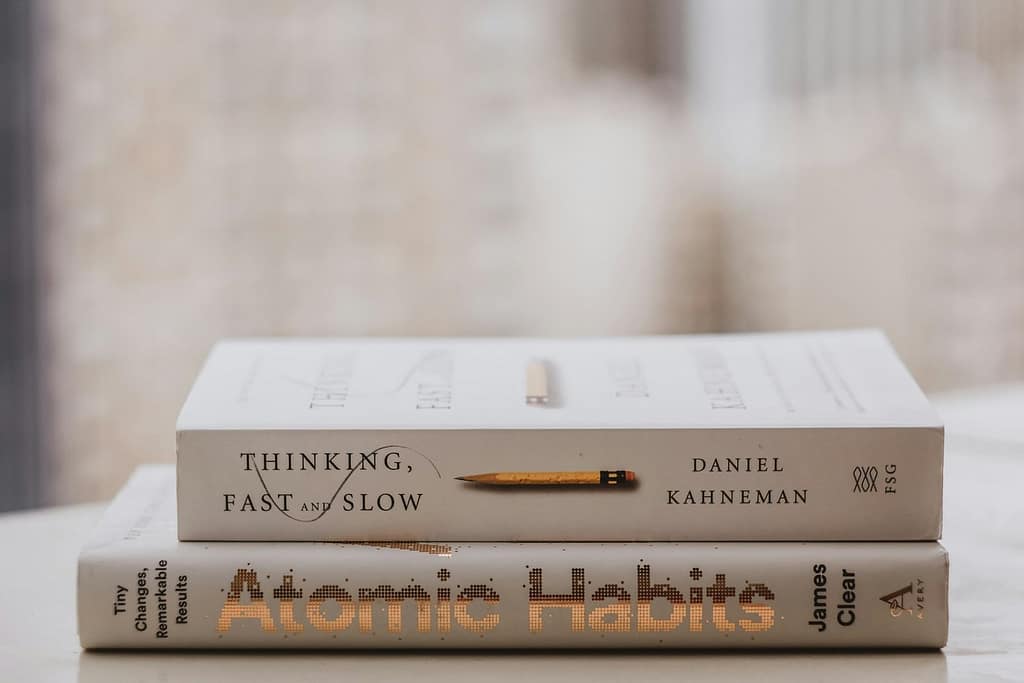
Photo by Lala Azizli on Unsplash
Designing Productivity Around Energy, Not Just Time
Most advice about productivity focuses on managing time more efficiently. Calendars, schedules, and planning frameworks are often presented as the primary solutions for improving output. While time is an important resource, it is not the only factor that determines how effectively work gets done. Energy plays an equally important role in goal setting and productivity, yet it is frequently overlooked.
Energy is not stable across the day or from week to week. Cognitive focus, emotional regulation, and physical stamina fluctuate depending on sleep, stress, health, and workload. When goal setting and productivity systems assume consistent energy, they create frustration. Tasks that appear manageable on a schedule may feel disproportionately difficult when energy is low, even if time is technically available.
A more sustainable approach to goal setting and productivity involves aligning tasks with energy patterns rather than forcing work into rigid time blocks. Planning can take more mental energy than people expect, which is why journaling or using a planner often works better when focus is already relatively high. Lighter or administrative tasks can be reserved for lower-energy moments.
When productivity is designed around energy rather than time alone, effort feels more proportional to output. This alignment improves efficiency while reducing the cumulative strain that often leads to burnout in poorly designed goal setting and productivity systems.
Treating Rest as a Structural Component, Not a Reward
Rest is often framed as the opposite of productivity, something that must be earned through sufficient effort. This framing implies that rest is optional or indulgent. In reality, rest is a prerequisite for sustainable goal setting and productivity, not a reward for completing tasks.
Without adequate recovery, focus deteriorates, errors increase, and motivation becomes increasingly unreliable. Over time, the absence of rest leads to diminishing returns, where additional effort produces less progress. In this context, burnout is not a failure of discipline but a predictable outcome of insufficient recovery.
Sustainable goal setting and productivity systems treat rest as a structural component. This means planning for rest in advance rather than fitting it in only after everything else is done. It also means allowing for lower-output days without interpreting them as setbacks.
Practical tools like weighted blankets, eye masks, or pillows and bedding that reduce physical strain can make rest feel more intentional and physically restorative; rather than something you only collapse into at the end of the day. Let’s be honest, when you are constantly in overdrive, sleep at the end of the day doesn’t even make you feel well-rested, because your mind is constantly racing about all the things on your to-do list.
When rest is integrated intentionally, productivity becomes more consistent over time. Progress may appear slower in the short term, but it is far more reliable across months and years. It’s also understandable if you struggle with resting initially because it feels unproductive. I unpack this struggle further in How to Give Yourself Permission to Rest, which takes you through how you can slowly, but surely allow yourself to reframe how you see and treat resting.
Creating a Weekly Structure That Supports Follow-Through
Weekly planning is one of the most effective tools for maintaining momentum without burnout. Compared to long-term forecasting, a weekly timeframe reflects how life actually unfolds. It provides enough structure to support goal setting and productivity while allowing room for adjustment. You don’t need to buy a detailed planner to do this, you can even use a simple weekly desk pad to jot down your thoughts.
A sustainable weekly structure prioritises clarity over volume. Instead of attempting to plan every possible task, the focus is on identifying what matters most during the week ahead. This clarity reduces decision fatigue and helps direct limited energy toward actions that genuinely support current goals.
When goal setting and productivity are approached this way, weekly planning becomes supportive rather than restrictive. The purpose of the plan is not to complete everything that could be done, but to ensure that effort is directed toward the most meaningful areas.

Photo by Jazmin Quaynor on Unsplash
Planning Tasks Without Overloading the Week
Burnout often develops when weekly plans are treated as fixed commitments rather than flexible intentions. When plans are written as non-negotiable expectations, any deviation can feel like failure. This mindset undermines motivation and creates resistance to re-engaging with tasks.
A more effective approach to goal setting and productivity treats planning as an experiment. Tasks are selected based on current capacity, with the understanding that plans may need to change. Leaving deliberate space for rest, recovery, and unexpected demands makes productivity systems more resilient.
By planning conservatively, it becomes easier to re-enter the workflow after disruptions. Productivity improves not because plans are followed perfectly, but because the system remains usable even when conditions are imperfect.
Using Monthly Reviews to Maintain Direction
While weekly planning supports short-term focus, monthly reviews provide perspective. They allow for reflection without micromanaging daily performance and help identify patterns rather than isolated successes or failures.
In the context of goal setting and productivity, effective monthly reviews focus on learning rather than judgment. Instead of asking whether goals were achieved exactly as planned, the more useful questions explore what moved forward, what stalled, and why.
Over time, monthly reviews help refine both goals and systems so they align more closely with capacity. Importantly, reviews should lead to small adjustments rather than complete overhauls. Sustainable goal setting and productivity depend on incremental improvement, not constant reinvention.
Adjusting Goals When Capacity Changes
Capacity is not static. Illness, workload changes, emotional stress, and life transitions all affect how much effort can be sustained. One of the most important skills in goal setting and productivity is knowing how to adjust goals in response to these changes.
Adjusting goals does not mean abandoning them. It involves modifying scope, pace, or methods to remain aligned with current conditions. A goal may progress more slowly, shift into maintenance mode, or require a lower-effort approach for a period of time.
Goal setting and productivity systems that allow for adjustment are more resilient. They acknowledge that consistency does not require uniform intensity. Maintaining some level of engagement, even at reduced capacity, often produces better long-term outcomes than stopping entirely and attempting to restart later.
Avoiding Perfectionism in Goal Setting and Productivity
Perfectionism often disguises itself as discipline or high standards, but it frequently undermines productivity. When goals are tied to flawless execution, minor setbacks can trigger disengagement. Progress becomes fragile because it depends on ideal conditions.
In goal setting and productivity, perfectionism commonly appears as all-or-nothing thinking, excessive planning without action, or difficulty starting unless circumstances feel just right. These patterns increase friction and reduce follow-through.
This dynamic is explored directly in the book Finish, which shows how perfectionism, not laziness; is often the biggest reason people abandon goals before they gain momentum.
Counteracting perfectionism involves redefining progress. Continued engagement, even when imperfect, is often a better indicator of success than ideal performance. Allowing for adjustment and error supports momentum and reduces emotional strain.
Over time, consistent imperfect action leads to more reliable results than sporadic bursts of perfection.
Photo by Kaja Kadlecova on Unsplash
FAQs
Q: How many goals should I work on at once?
Most people make more progress by focusing on one primary goal supported by one or two secondary goals. This structure supports clearer goal setting and productivity by preventing attention from becoming fragmented.
Q: Why do I lose motivation even when goals matter to me?
Motivation fluctuates with energy, stress, and context. Effective goal setting and productivity rely more on systems than motivation, allowing progress even when motivation is low.
Q: Is it normal to need rest days from productivity?
Yes. Rest is an essential component of sustainable goal setting and productivity. Without adequate recovery, focus and consistency decline over time.
Q: What if my goals change?
Goals are meant to evolve. Adjusting goals in response to new information or changing circumstances is a sign of effective goal setting and productivity, not failure.
Q: How do I restart after falling behind?
Restarting is easier when goals are flexible. Returning to the smallest viable action often restores momentum within a healthy goal setting and productivity framework.
What’s Next?
Once goal setting and productivity systems are in place, the next step is refinement rather than expansion. This might involve simplifying routines that feel burdensome, adjusting timelines to better reflect capacity, or introducing tools that reduce friction instead of adding complexity.
Progress does not require constant optimisation. In many cases, maintaining what already works is the most productive choice. The purpose of goal setting and productivity is not to maximise output at all costs, but to create a way of working that supports long-term engagement, growth, and wellbeing.
However, if you are already dealing with burnout, then you cannot build sustainable goal setting and productivity structures until you address your underlying exhaustion, which is what I cover in my post How To Overcome Work Burnout. Whilst this focuses on workplace stress, the tools and strategies are universal to address burnout overall.


