

Movement is one of the most natural things our bodies can do, yet for many of us, it has become complicated. As the new year approaches, we all scramble to schedule in our new year resolutions. Somewhere between the pressure to “get fit,” the endless routines we start and abandon, and the guilt that follows, we’ve lost the joy that once came so easily.
This guide is about helping you to reconnect with movement, not through perfection or performance, but through awareness and care.
When you stop viewing movement as a task to complete and instead see it as an expression of how you feel, everything shifts. You begin to notice what your body craves, what releases tension, and what genuinely brings you peace. You start to move and reconnect with movement not because you “should,” but because you want to, and that’s when it becomes sustainable.
This post may contain affiliate links. If you make a purchase through them, I may earn a small commission at no extra cost to you.
Overview
This isn’t a post about fitness. It’s about reconnection. In the next few sections, we’ll explore:
- Reconnecting with nature
- How to reshape your relationship with movement
- Ways to listen to your body’s cues
- How to build a supportive environment
- The emotional side of moving with awareness
- Why rest and stillness are equally sacred.
Each of these sections will help you rediscover what feels like home to reconnect with movement in your way.
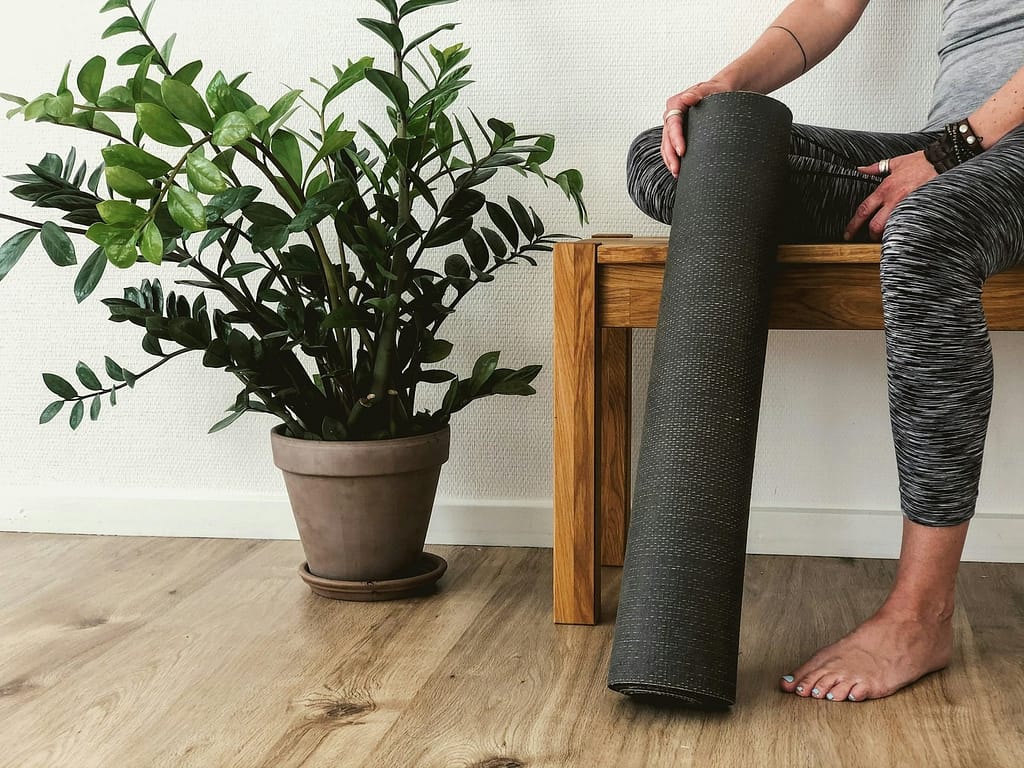
Photo by Louise Vildmark on Unsplash
Reconnecting With Nature: The Missing Piece in Your Movement Journey
We often forget that movement didn’t start in gyms or studios, it started outdoors. Long before routines and trackers existed, humans connected with their bodies through nature: walking through forests, gathering food, exploring landscapes, grounding their feet on real earth. When you step outside, even for a short moment, your body remembers this instinct.
Nature has a unique way of regulating the nervous system and is one of the best ways through which you can reconnect with movement. Studies show that even 10 minutes outside can lower stress, slow your heart rate, and settle your thoughts. This is why movement becomes more meaningful when you take it beyond four walls and reconnect with nature. A simple walk surrounded by trees hits differently compared to walking on a treadmill. The air feels lighter, the colours feel richer, and your mind feels clearer.
To reconnect with movement through nature, it doesn’t need to be dramatic. You’re not expected to hike mountains or swim in lakes (unless you want to). It can be as gentle as:
- Walking around your neighbourhood at sunset
- Sitting in a park barefoot and stretching
- Doing slow breathing exercises on your balcony
- Pausing to notice the sky, wind, or warmth on your skin (especially when you’re stuck in annoying traffic)
Nature teaches you presence without effort. When you’re outside, your senses automatically tune in: the way the light shifts, the sound of leaves, the feeling of ground beneath you. Suddenly, movement no longer feels like a task, it feels like returning home.
If you’ve been disconnected from your body, reconnecting with nature is one of the softest and most powerful ways to find your way back and reconnect with movement.

Photo by Urban Vintage on Unsplash
Reframing Movement as Self-Expression
To reconnect with movement, start by letting go of the idea that it has to look a certain way. Movement doesn’t need to mean gym workouts, running marathons, or tracking calories. It can be dancing in your living room, swaying while you cook, or walking under the sunset after a long day. During the Covid-Pandemic, I bought a yoga mat since lockdown meant I could no longer go for walks or to the gym. Sometimes it wasn’t even about working out; I would play my favourite songs on my playlist and just lay there a while after doing gentle stretches.
Movement is a language, a way your body expresses what words can’t. When you allow yourself to move without expectation, you reconnect with parts of yourself that have been quiet. There’s something liberating about moving to release energy instead of to control it.
You might even start noticing patterns: how your energy lifts after walking, how your anxiety softens when you stretch. That’s your body communicating, reminding you it wants to feel alive, not managed.
Oftentimes to reconnect with movement also means finding gentle ways for your body to release. For example, when you stretch, your body also simultaneously releases any stored tension. When you’re moving in any way, you’re looking after your mental health at the same time as your physical.
Photo by Ankush Minda on Unsplash
Listening to Your Body’s Rhythm
Our bodies are always speaking, we’ve just become accustomed to tune them out. Listening is the gateway to reconnect with movement. Some days your body wants intensity, other days softness. There’s wisdom in that variation. You don’t always have to operate at 100 to reap the benefits of movement. It’s not always about pushing yourself to your limits, rather it’s about how gently you can respond to your body when it asks for movement.
Instead of asking “what should I do today?” try “what would feel good to my body right now?” Maybe it’s a short walk. Maybe it’s stretching in silence. Maybe it’s resting entirely. The rhythm of your body isn’t fixed, it’s cyclical, intuitive, and deeply personal.
We tend to get lost in the guilt of being inconsistent with our movement, or being unable to exert the same level of energy daily. Whilst consistency is key to building habits over time, you also need softness whenever you start anything new or are wanting to reconnect with movement. Gentle movement is the integration of listening to your mind and expressing it through your body.
Learning to trust that rhythm takes time. But the more you follow it, the less resistance you’ll feel toward movement. You stop forcing and start flowing.
Designing an Environment That Encourages Movement
Your surroundings influence your habits more than you think. If you want to reconnect with movement, make your environment a gentle invitation to move.
For example, keep your mat rolled out and ready, it’s a visual cue to stretch. Add a small space in your home that feels open, light, and comfortable to move in. Play background music that helps you sway while tidying or cooking.
If you work long hours at a desk, try under-desk movement tools or take calls standing. It’s not about “fitting in a workout”; it’s about letting movement weave through your day naturally. If you are too tired to go for a walk or to that one exercise class, you can always set up a little home gym for home workout days with dumbbells and other equipment.
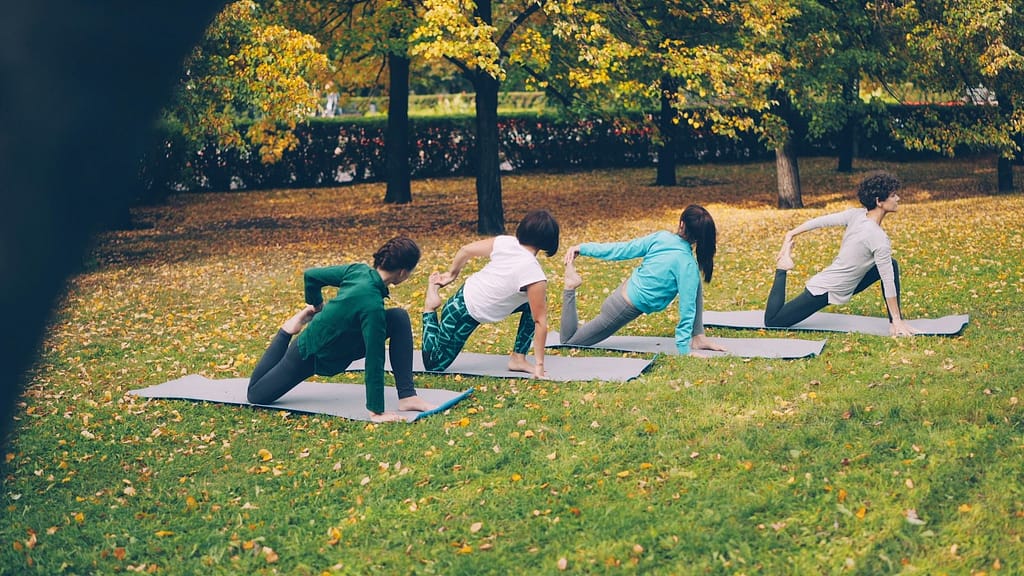
Photo by Vitaly Gariev on Unsplash
Moving With Presence and Gratitude
The true magic of movement is how it pulls you back into the present moment. When you reconnect with movement, try to do it with intention. Feel your breath expanding your chest, the weight shifting through your feet, the stretch of your spine.
Pairing movement with gratitude transforms it from routine to ritual. You start to see your body not as something to change, but something to thank. Gratitude rewires your experience: instead of focusing on effort, you start appreciating ability.
Your body has carried you to this point today, even when you may have neglected in the past, even when you may have even disliked it, it has always carried you through all your life experiences and kept you alive and well the best way it knows how.
If you want to deepen this connection, journal after moving. Write about how you felt before and after, what released, what softened, what you noticed. This reflection helps you strengthen the emotional link between your body and mind and eventually it will feel habitual to reconnect with movement.
Honouring Stillness and Rest
Rest isn’t the opposite of movement, it’s what allows movement to exist sustainably. When you reconnect with movement, part of that process is learning when not to push.
As a society we have labelled rest as unproductive and so we are constantly in overdrive, pushing ourselves beyond our limits. This leads to functioning on autopilot and through burnout. Unfortunately this state has become so glorified and resting can be seen as “lazy”. You are allowed to stop and rest from time to time even if you have been told otherwise.
Our culture often celebrates doing, but your body celebrates balance. Some of the most healing forms of movement happen in stillness: mindful breathing, slow stretches, or simply lying down and letting your muscles soften.
Honour your rest days the same way you honour active ones. Create rituals for restoration like warm baths, herbal teas, cosy clothes, slow evenings. My personal go to relaxation technique is to put on some music with a fragrant candle – the scent helps my body wind down.
When you listen to your body’s signals to rest, you’re still connecting with it. You’re saying, “I hear you.”
FAQ
Q: What’s the best way to reconnect with movement after a long break?
A: Start small: think five minutes, not an hour. Begin with what feels easy and enjoyable, like stretching or walking. The goal is to rebuild trust with your body.
Q: How can I stay consistent without making it feel like pressure?
A: Link movement to existing habits. For example, stretch while your coffee brews or do light yoga before bed. Small rituals create natural consistency when you are aiming to reconnect with movement.
Q: Can I combine mindful movement with other routines?
A: Absolutely. Movement pairs beautifully with journaling, meditation, and gratitude practices. These combinations make your self-care routine holistic.
What’s Next?
To reconnect with movement means coming home to your body. It’s a lifelong relationship, one built on trust, awareness, and compassion. As you move more mindfully, you’ll notice subtle shifts in mood, focus, and self-esteem.
Your body doesn’t need discipline to feel alive, it needs presence. Keep showing up with softness, not expectation. Let movement be the thing that grounds you when everything else feels uncertain.


Pingback: How to Start Gratitude Journaling in 2026 – A Simple Beginner’s Guide - rnworld
Pingback: How to Build Your Routine for 2026 - in 5 Simple Steps - rnworld