
Solo travel is often sold as freedom, confidence, and independence, and it absolutely can be. But for many people, especially women, it also comes with anxiety, hyper-vigilance, and the quiet pressure of having to hold everything alone. For me, safety while travelling isn’t just about avoiding danger, it’s about feeling calm enough to actually enjoy where I am. It’s like wearing a seatbelt while driving, you have the right skills, but you protect yourself anyway because the road is shared with the rest of the world.
These travel safety tips are framed through a self-care lens, focusing on tools that support both your physical safety and your nervous system. Because feeling protected is a form of self-respect, not fear. Travelling alone teaches you a lot about your boundaries, your instincts, and your capacity to take care of yourself in unfamiliar places. It also shows you where your nervous system feels most stretched. Safety tools don’t exist to make you paranoid, they exist to give your body permission to soften. When you feel supported, you move differently. You rest differently. You explore differently.
This list of travel safety tips isn’t about preparing for worst-case scenarios. It’s about creating layers of quiet support so your energy can go toward living your experience rather than managing background tension.
This post may contain affiliate links. If you make a purchase through them, I may earn a small commission at no extra cost to you.
Overview
Travel safety tips & essentials aren’t about anticipating harm, they’re about building trust with yourself while you’re away from familiar ground. When you travel solo, you carry your decisions, your awareness, and your emotional safety alongside your suitcase. Unlike group travel, you don’t have built-in backup. That doesn’t mean danger, it simply means responsibility.
The items in this list were chosen based on how well they support physical safety in practical ways, nervous-system regulation and peace of mind, ease of use while travelling alone, emotional reassurance without paranoia, and realistic portability. These travel safety tips are meant to help you feel supported rather than constantly alert. You don’t need every item on this list. Even one or two can meaningfully shift how safe your body feels in unfamiliar spaces.
It’s also important to research whether certain tools are allowed in the city/country you are visiting as laws about self-defence tools vary widely between countries (and even between states or cities). What’s legal in one place, like a personal alarm, pepper spray, or certain door locks, might be restricted or outright banned somewhere else. For example, it’s illegal to carry pepper spray for protection in Australia but it’s fine in parts of the USA. As a solo traveller, part of “safety” means knowing the rules, not just carrying tools.
Table of Contents
1. Duress Alarm / Personal Safety Alarm
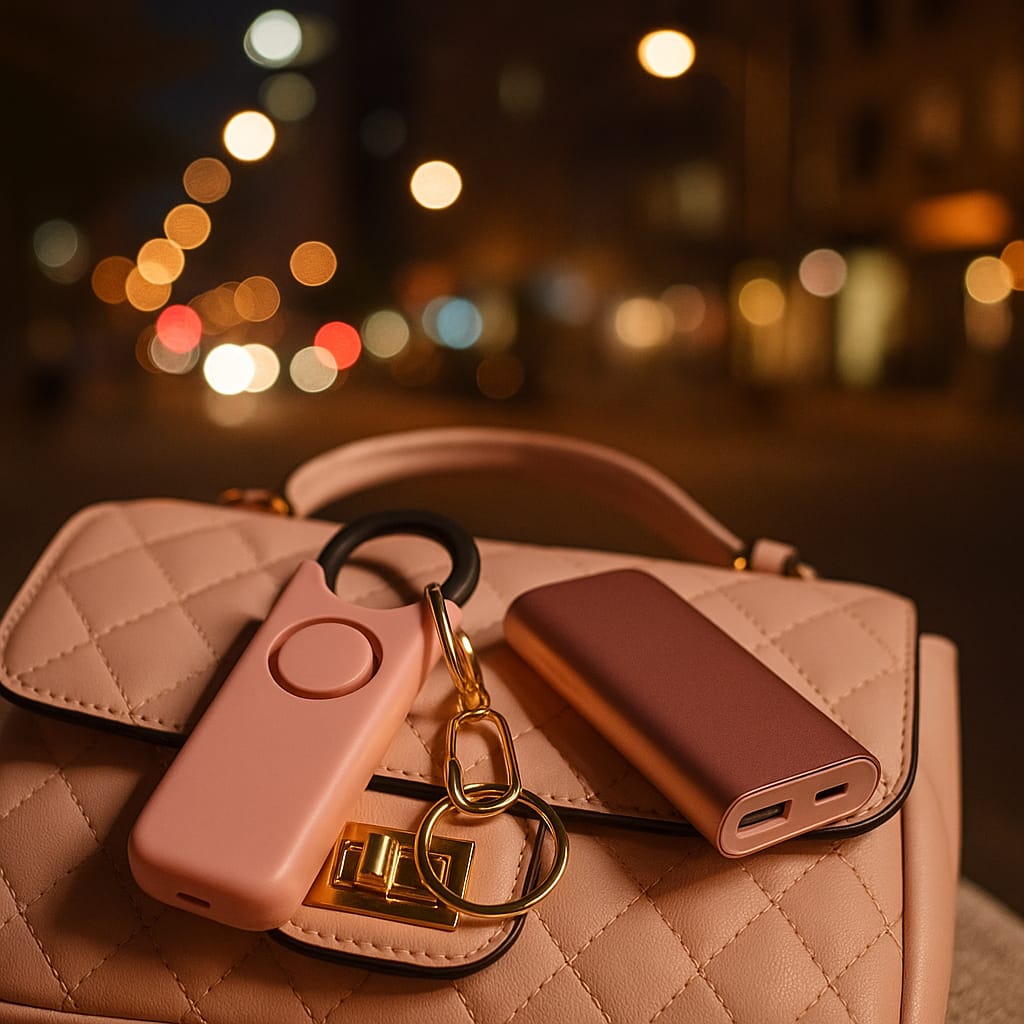
A duress alarm is a small device that emits a loud sound when activated. It’s designed to draw attention instantly if you ever feel unsafe. The one I linked is the one I personally own, and it genuinely changed how safe I felt walking alone at night when I was travelling solo. Out of all the travel safety tips here, this is the one I followed as a starting point. The main reasons I recommend this:
- It’s compact
- Easy to conceal
- Looks like a USB so it’s very subtle
- Doubles as a door alarm for your Airbnb/hotel
- It’s extremely loud so it will be heard immediately (I tried it once and it felt like it was piercing my ears, but that was also reassuring in case I ever needed it)
- The cap doesn’t come off on its own, so it isn’t constantly activated by being loose in your bag
- I found that it’s small enough to be allowed in different countries/cities
- I was able to put it in my carry-on baggage
- Comes with a flashlight and cable
If there is one item you buy from my travel safety tips list, I would highly recommend this duress alarm.
Also, from a self-care perspective, the power of a personal alarm isn’t just the sound, it’s the reassurance. Knowing that I have a way to draw attention if I ever needed to immediately softened my nervous system. I don’t expect something to go wrong, but I no longer feel like I have zero options if I am uncomfortable. And I say that as someone who does get very anxious in new and unfamiliar places about my safety.
For solo travellers, especially those who move through cities alone at night, this is one of those travel safety tips that works quietly in the background. You may never need it, but your body feels calmer knowing it’s there. The biggest benefit is psychological safety. The main limitation is that it relies on sound rather than physical protection, but for many people, that’s exactly what creates peace rather than fear.
2. Portable Door Lock or Door Stopper
Sleeping in unfamiliar places can keep your nervous system on high alert, even when the space itself is perfectly safe, making these travel safety tips essential. A portable door lock or door stopper adds an extra layer of physical boundary between you and the outside world while you rest.
From a self-care angle, this isn’t about expecting danger, it’s about giving your body permission to fully relax. Many solo travellers struggle to sleep deeply in hotels or Airbnbs simply because the environment is unfamiliar. This small tool can add a subtle sense of control that allows your system to downshift.
One of the more underrated travel safety tips is how much sleep quality affects emotional regulation while travelling. When you’re rested, your awareness improves, your anxiety lowers, and your confidence rises. The main downside is that not every door is compatible, but when it works, it creates an immediate sense of safety.
Where this becomes especially useful within travel safety tips is when you first arrive at your Airbnb or hotel. Before you fully settle in, it’s worth doing a quick check of the room: under the bed, behind doors, inside the wardrobe, and on the balcony if there is one. Using a portable door stopper during this process helps keep the main door open, which allows for a quick exit if something feels off, or visibility if someone approaches while you’re still checking the space.
3. Anti-Theft Backpack or Crossbody Bag
When you’re travelling alone, your bag becomes your anchor. It holds your essentials, your documents, your passport, your money, and often your phone, which is your lifeline. Anti-theft bags are designed with locked zips, slash-resistant fabric, and back-facing pockets that reduce opportunistic theft.
Emotionally, this kind of security reduces constant scanning. Instead of checking your zips every few minutes in crowded spaces, you’re able to stay present. This is one of those travel safety tips that quietly gives your mind more breathing room.
The goal isn’t to eliminate risk, it’s to reduce the mental load of “What if?” When your bag feels secure, your attention returns to the world instead of your belongings. The trade-off can be slightly heavier material, but most people feel the peace of mind is worth it.
4. Apple AirTag or Tracking Tag
Tracking tags allow you to locate luggage, bags, or even keys via your phone. On the surface, this feels purely practical, but emotionally, it’s a huge relief.
Losing belongings while travelling solo can feel especially destabilising because you don’t have immediate backup. One of the most modern travel safety tips is recognising that information equals regulation. When you can see where your bag is, your nervous system stays grounded instead of spiralling.
It’s not about control, it’s about clarity. Even if something goes missing, your body remains oriented because you still have data. The main limitation is battery replacement over time, but the emotional relief often outweighs that easily.
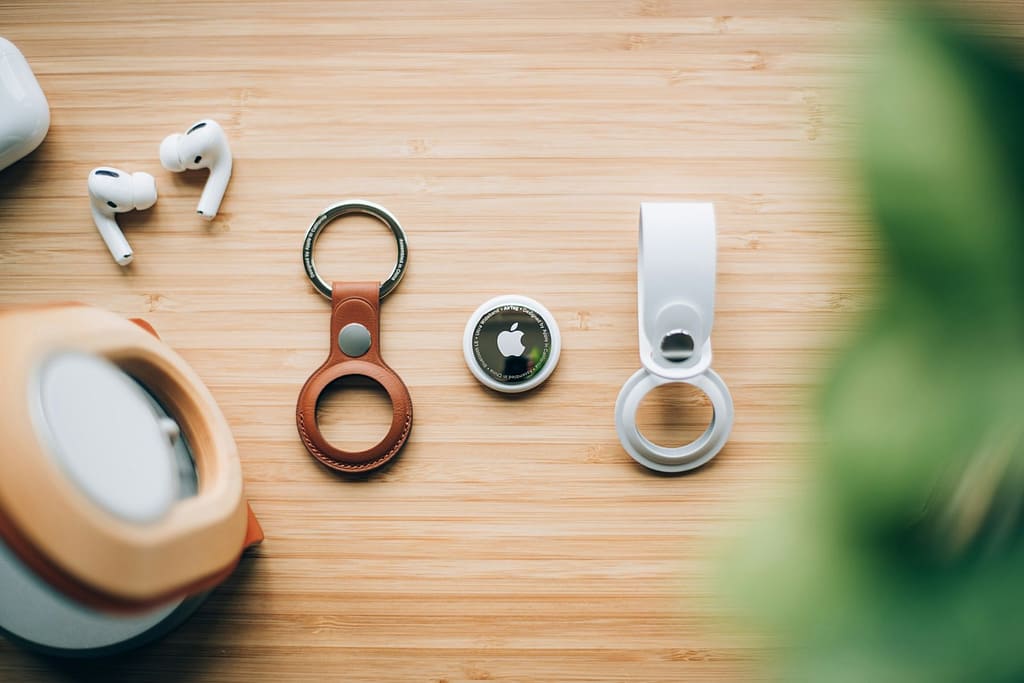
Photo by Jonas Elia on Unsplash
5. Hidden Money Belt or Neck Pouch
Separating your valuables across different locations on your body can dramatically reduce stress when you travel solo. A hidden money belt or neck pouch sits discretely under clothing and holds your passport, emergency cash, and backup cards; constituting one of the most effective travel safety tips.
From a nervous-system perspective, this prevents “all-or-nothing” thinking. When everything valuable lives in a single bag, anxiety often lives there too. One of the most calming travel safety tips is knowing that even if one item is misplaced, you’re not completely stuck.
You may never need the emergency resources stored there. That isn’t the point. The point is that your mind can relax because it knows you’re resourced. The main downside is comfort in hot climates, but for many people, that fades after a day.
6. Portable Power Bank
A dead phone while travelling alone doesn’t just mean inconvenience, it can disconnect you from maps, transport apps, accommodation details, and emergency contacts. A portable power bank is one of the most foundational travel safety tips simply because it keeps your connection alive. You should also pair this with a universal travel adaptor, because this ensures you can charge all your devices regardless of where you are travelling.
From a self-care lens, this reduces that stranded feeling. Your body knows you’re still connected to navigation, help, and communication. That knowledge alone lowers background stress while moving through cities, airports, or unfamiliar streets – making this one of the best travel safety tips.
The only real downside is remembering to charge the power bank itself. Once it becomes a habit, it becomes invisible support.
7. Travel-Sized First Aid Kit
When you travel with others, someone usually has what you need. When you’re alone, you become your own first responder. A small first aid kit with bandages, antiseptic, pain relief, and personal essentials builds a surprising amount of confidence.
This is one of the quietest travel safety tips on the list, but it matters. It turns small injuries into manageable moments instead of emotional overwhelm. It also reinforces your ability to care for yourself physically when you’re far from home.
The main inconvenience is remembering to restock it, but the sense of autonomy it creates is deeply grounding. If the one you pack has scissors or other sharps, just remember to pack it in your checked baggage so it doesn’t get thrown out during airport security checks.
8. VPN App for Public WiFi
Digital safety is physical safety now. When travelling solo, you often rely on public WiFi for navigation, bookings, communication, and payments. A VPN encrypts your connection and reduces exposure to data theft.
Many people don’t realise that some of the most important travel safety tips now live entirely online. A digital breach can feel just as destabilising as a physical one when you’re in an unfamiliar place.
From a self-care perspective, this reduces background worry while using public networks. You’re not constantly thinking about vulnerability, your system feels protected while you move.
Photo by Daniil Komov on Unsplash
9. RFID-Blocking Wallet
RFID-blocking wallets protect contactless cards from being scanned without your knowledge. While the technical side of this can feel abstract, the emotional impact is simple: fewer invisible threats living in your mind.
One of the subtle travel safety tips is reducing the number of unknown risks that sit quietly in the background. When those fade, presence increases. This kind of protection requires no active effort once it becomes your everyday wallet.
The only limitation is remembering to use it consistently, but once it becomes habitual, it fades into supportive background noise.
10. Offline Maps & Emergency Contacts App
Signal isn’t guaranteed everywhere. Having offline maps and pre-saved emergency contacts is one of the least glamorous yet most powerful travel safety tips.
From a nervous-system perspective, this removes the fear of disorientation. Your body relaxes when it knows you won’t be directionless if reception drops. It also ensures you can reach help quickly without relying on memory under stress.
This kind of preparation doesn’t feel dramatic, it simply feels stabilising. And stability is often what allows solo travel to feel enjoyable instead of overwhelming.
11. Hidden Camera Detector
One of the lesser-talked-about but increasingly relevant travel safety tips is protecting your privacy in unfamiliar spaces. A hidden camera detector is designed to help identify suspicious lenses or signals that may indicate covert recording devices in places like hotels, Airbnbs, or changing areas. For solo travellers, this adds a quiet but powerful layer of personal safety.
From a self-care perspective, this isn’t about assuming the worst, it’s about giving your nervous system reassurance that your private space is actually private. When you feel confident in your environment, your body can relax instead of staying on high alert. As far as modern travel safety tips go, this one supports both physical boundaries and emotional ease.
Additional Travel Safety Tips
Alongside physical safety tools, small habits and awareness shifts can make a big difference to how safe and grounded you feel while travelling alone. These additional travel safety tips are simple, easy to apply, and designed to support both your awareness and your nervous system without creating fear.
Look up and save the emergency contacts for the country you are travelling to before you arrive. This includes the local numbers for police, ambulance, and fire services. Saving these in your phone ahead of time means you won’t have to scramble for information if you’re feeling stressed or disoriented in an emergency.
If you’re walking with headphones or earphones in, remember to keep the volume at a level where you can still hear what’s happening around you. You don’t need to move through the world in silence, but being able to hear footsteps, traffic, or voices can help you stay oriented and aware without feeling hyper-vigilant.
Share your live location with someone you trust when you’re heading somewhere unfamiliar, especially at night. This doesn’t mean you expect something to go wrong, it simply creates a quiet layer of connection and reassurance in case you ever need support.
Trust your body’s signals even when you can’t logically explain them. Discomfort doesn’t always arrive with a clear reason. If something feels off, you are allowed to leave without needing to justify it to anyone, including yourself.
Avoid advertising that you’re travelling alone to strangers and on social media. You don’t owe anyone details about your plans, accommodation, or itinerary. Boundaries are a form of travel safety as much as any tool.
Keep a small amount of emergency cash separate from your everyday wallet. Even in very digital cities, cash can become essential if your phone dies, cards fail, or systems go down unexpectedly.
Take a quick moment to orient yourself each time you arrive somewhere new. Notice where the exits are, where people are moving, and where you’d go if you needed help. This isn’t about scanning for danger, it’s about helping your nervous system feel rooted in the space.
One of the most overlooked travel safety tips is staying regulated when things feel unfamiliar. When your body feels grounded, you make clearer decisions. When your body is overwhelmed, everything can feel like a threat. Slowing down is protective.
Photo by Francesca Tirico on Unsplash
How to Use Travel Safety Tips as a Form of Self-Care
What often surprises people when they implement even a few of these travel safety tips is how much their emotional experience shifts. They feel less hyper-vigilant. They sleep more deeply. They move through unfamiliar environments with more softness and less guardedness.
Safety tools don’t mean you’re scared. They mean you’re resourced. They mean you trust yourself enough to prepare gently instead of bracing aggressively. There is a meaningful difference between fear-based preparation and self-respect-based support.
You don’t need to feel fearless to travel solo. You just need to feel supported.
One of the quiet truths of solo travel is that your nervous system notices everything: sound, light, movement, unfamiliar faces. When it feels protected, exploration becomes expansive instead of heavy.
Final Thoughts on Travel Safety for Solo Travellers
These travel safety tips aren’t about controlling every outcome or preparing for worst-case scenarios. They’re about building quiet trust with yourself, that you are allowed to explore, rest, enjoy, and belong in the world without carrying constant tension.
Safety isn’t just physical. It’s emotional. It’s psychological. It’s nervous-system regulation. And choosing tools that help you feel grounded while travelling alone is a form of self-care you get to take with you wherever you go.
You don’t need every item on this list. Even one layer of extra support can change how your body experiences the world. When your body feels safe, your life opens.


Pingback: The Real Benefits of Solo Travel: Why Travelling Alone Can Change You in 2026: An Informative Guide - rnworld