
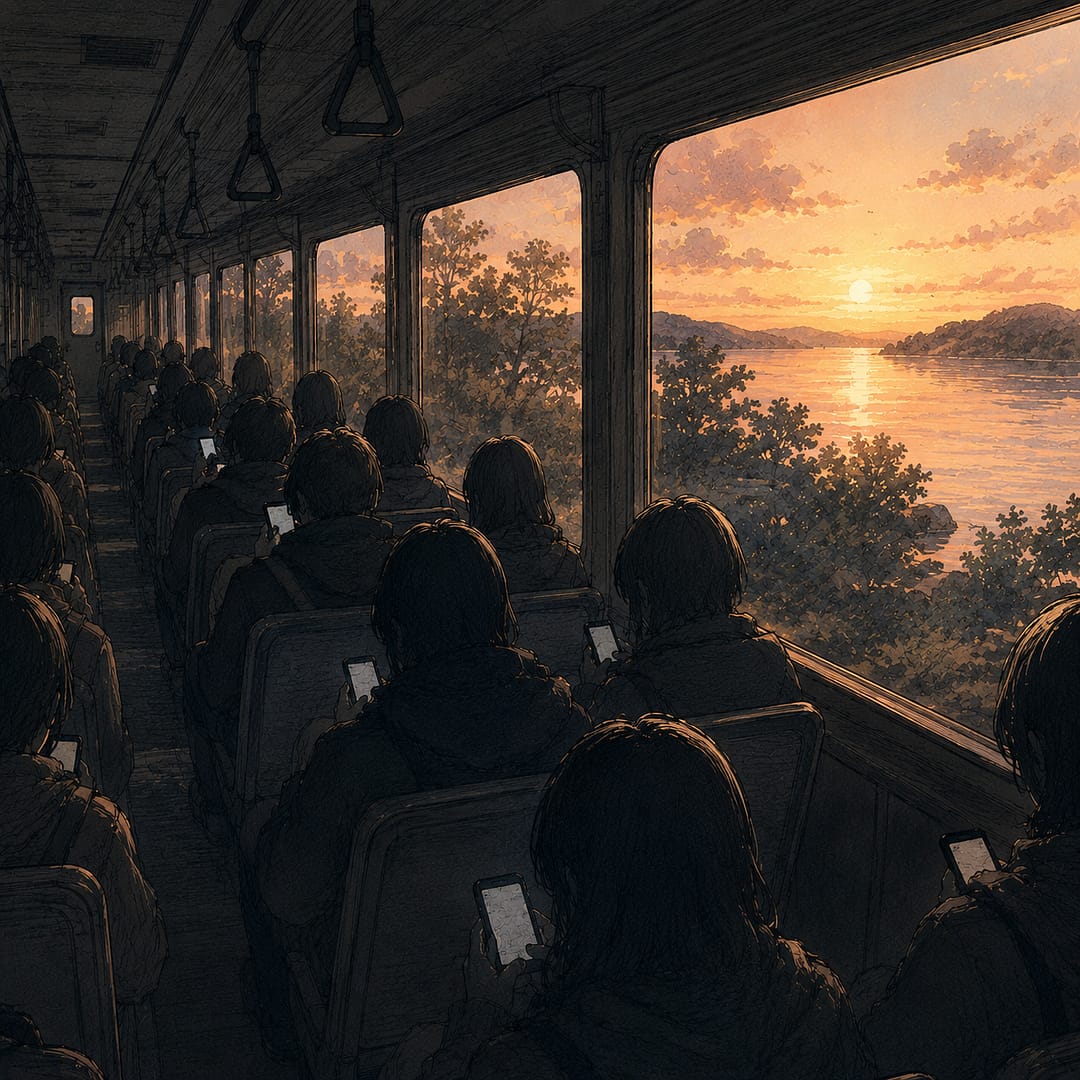
Modern life feels exhausting in ways that go far beyond simply being tired. It is not always dramatic, nor does it necessarily arrive through breakdowns, crises or obvious suffering. Instead, it exists quietly beneath everyday life while we continue functioning as normal. We wake up, go to work, answer emails, pay bills, buy groceries, scroll through our phones, make plans for the weekend and continue participating in the routines we are expected to maintain, all while carrying a heaviness we barely have time to process. There is a particular emotional fatigue that has settled over modern life, and I do not think enough people know how to talk about it properly.
It feels existential.
There are moments where I genuinely stop and wonder how so many of us became this disconnected from ourselves without fully noticing it happening. Life feels faster now, more expensive, more urgent and more performative. There is a strange numbness many people carry, where we know time is passing quickly and know life should mean more than surviving systems, yet we are often too exhausted to emotionally process what is happening while we are inside of it. Modern life feels exhausting because so much of our energy is spent simply trying to keep up.
The working class has always fought for survival in one way or another, but the form survival takes today feels psychologically different. Survival is no longer just physical labour or long factory shifts. It is emotional labour, mental labour and constant cognitive overload. It is trying to survive economically while also healing trauma, maintaining relationships, improving ourselves, building careers, managing burnout and remaining emotionally functional inside a society that increasingly feels disconnected from basic humanity.
Guide Overview
This is not a post about “fixing” your life or escaping modern society to suddenly become peaceful overnight. It is simply an honest reflection on why modern life feels exhausting for so many people right now, and why so many of us feel emotionally disconnected despite constantly moving. Beneath all of the burnout, urgency and noise, I think many people are grieving a way of living that felt slower, softer and more human. Think of this like a virtual gathering where we all sit and grieve together; our presence and the realisation we aren’t alone; becoming solace for one another.
This post may contain affiliate links. If you make a purchase through them, I may earn a small commission at no extra cost to you.
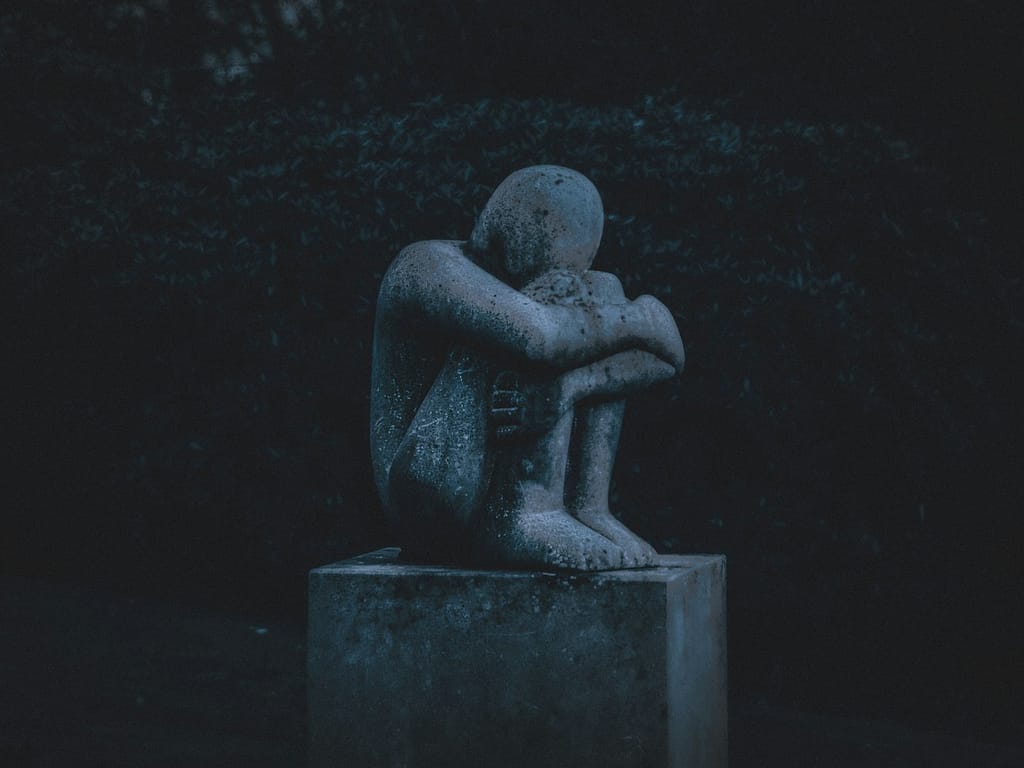
Table of Contents
When Life Started Feeling Harder To Hold
One of the strangest things about why modern life feels exhausting is how gradual the shift was. It did not happen overnight. There was no singular moment where society collectively announced that life would now become more emotionally draining, financially unstable and psychologically overwhelming. Instead, it feels more like a lemon being squeezed slightly more each year until eventually we woke up and realised how drained we had become.
I remember being younger and life feeling slower. Not perfect, because every generation has struggled in different ways, but slower. Takeaway food tasted like actual food. Going out did not feel like a luxury that required financial recovery afterwards. Families could still participate in small joys without analysing every purchase against rising rent, mortgage repayments, groceries and fuel prices. There was stress, but urgency did not feel woven into every second of existence. Part of why modern life feels exhausting is because people are adapting to conditions that quietly wear them down over time.
Hence, now modern life feels exhausting because nearly everything carries pressure attached to it. People are expected to survive inside economies where housing prices continue rising while wages fail to meaningfully keep up. Entire generations quietly accept they may never own homes because the gap between ordinary income and financial stability has become increasingly unrealistic. Gen Z are criticised for “giving up” on traditional milestones while simultaneously inheriting economies where basic security feels harder to access than it did for previous generations.
I remember scrolling Instagram the other day and a creator was talking about artists cancelling concerts and articles questioning whether Gen Z is the cause for the theatre industry shutting down because they don’t go to the movies anymore. He was crashing out because the reason none of us are going to these concerts or the movies is because most of us just cannot afford it anymore – and honestly it was such a valid crashout.
A lot of the response to this reality eventually circles back to the same advice: “work harder,” “hustle more,” “pick up another job.” But sometimes I stop and wonder why people are expected to work two or three times harder just to achieve the same level of comfort previous generations could often sustain on a single household income.
That is not laziness.
Humans were never meant to continuously produce this much output simply to earn the right to exist comfortably.
Realistically, I know the system cannot simply be overhauled overnight, and I understand that structure and stability are necessary for society to function. However, when I stop and think about how strongly the value of a human life is tied to wealth and economic value within society, it genuinely breaks my heart and validates why modern life feels exhausting.
In a Utopia, every life would hold equal value. In our Dystopia, wealth, power and social status often determine your access to things like quality healthcare, legal representation, education, safety, opportunities, basic rights and meaningful connections, creating a society where some lives are treated as inherently more valuable than others.
The Psychological Cost Of Survival
There is something psychologically damaging about continuously working while still feeling financially fragile.
Modern life feels exhausting because people are constantly adapting to instability without being given time to emotionally process the impact of that adaptation. Human beings can adjust to almost anything over time, including conditions that slowly wear them down. Eventually, survival becomes so normalised that people stop recognising how exhausted they truly are.
Additionally, modern life feels exhausting because people are not simply living anymore. The systems we exist in quietly deplete us of our time, energy, attention and sense of self. This makes years morph into a blur and we don’t even realise it; until we do. I can’t trace back exactly when it started to feel like this, but more and more it feels as though I am constantly trying to insert small pockets of life in between work, when it should really be the other way around.
Even our “free time” often revolves around preparing ourselves to return to work again. Plans are scheduled around it. You get off work early? Now you have to commute home, do some chores, cook some dinner, and if you’re lucky, you get 1, maybe 2 hours of chill time before you have to go to bed again.
If it’s Sunday and you have work the next morning, there is an invisible limit placed on how much freedom you can actually have. You cannot stay out too late. You cannot fully relax. There is always the awareness of the next morning lingering in the background. It’s like having a curfew as a teenager, except it doesn’t go away once you grow up.
For a lot of people, coming home after work and doomscrolling till bed time is what equates to winding down now – they simply don’t have the energy and/or means to engage in anything else.
Ironically enough, time is our real currency; and we know that, but we can’t act on it. The system has built money to be our currency and slowly it has made it more and more inaccessible to the average person; that in fighting for the currency of survival, we lose the currency of life.
According to this Oxfam Article – in 2024, an Australian billionaire was making over 1,300 times what an average working class Australian was making per hour. For reference, this roughly translates to $67,000 AUD per hour, an amount equal to or greater than many Australians’ annual salaries before tax. When you really sit with numbers like that, it becomes difficult not to question what kind of society people are actually being asked to emotionally survive within.
The Autopilot Existence
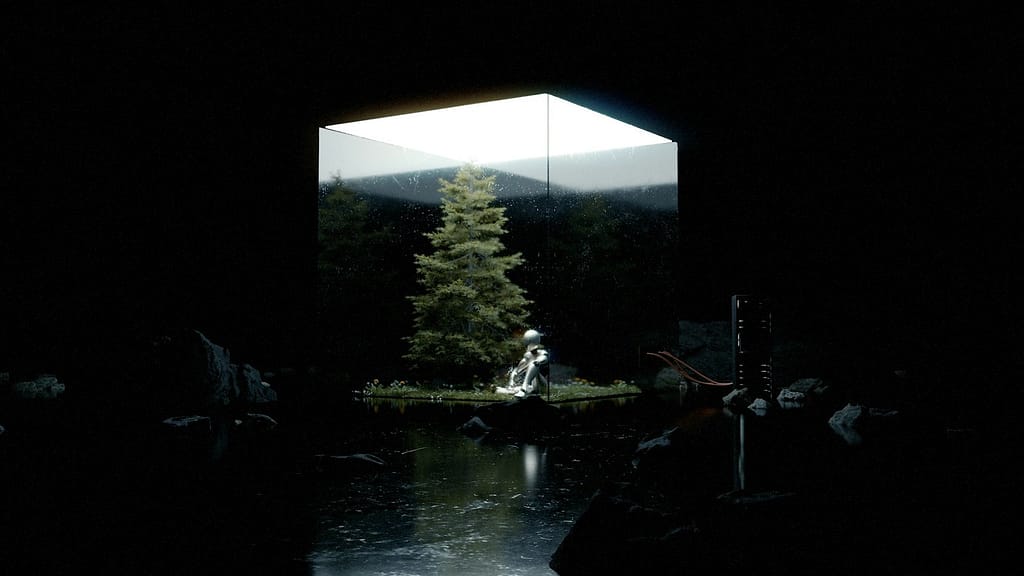
One of the most unsettling parts about why modern life feels exhausting is how unreal time has started feeling. Entire weeks disappear while people barely feel emotionally present inside them. Most people begin Monday already waiting for Friday because the weekend represents temporary relief from responsibility, yet even weekends now feel fleeting. Sunday carries its own form of anxiety because it signals the return of another work week, but Monday itself often disappears just as quickly.
Months pass. Seasons change. People age.
And somehow many of us barely feel connected to the process while it is happening.
Part of why modern life feels exhausting is because life increasingly feels as though it is being managed rather than fully lived. People move through routines, responsibilities and obligations so quickly that entire stretches of time begin dissolving into one another. There are moments where I genuinely stop and wonder where the last few years actually went, because although I was physically present for them, emotionally they often feel blurred together.
Covid intensified this feeling dramatically. The pandemic now feels like a fever dream that permanently altered peoples’ relationship with time, isolation and reality itself. Something shifted psychologically during that period. Life became stranger afterwards. More detached. More uncertain. More surreal. Even now, years later, many people still describe time as moving unnaturally fast (can you believe it’s been over 6 years since we first heard of Covid?!)
I think part of the reason modern life feels exhausting after Covid is because people never fully emotionally recovered from living through prolonged uncertainty. During lockdowns, consumption became one of the few remaining sources of stimulation available. People spent money online, ordered unnecessary things, binged content endlessly and sought distraction wherever possible because there was very little else to emotionally anchor ourselves to.
Even I remember spending hundreds during that period without fully understanding where the money had gone afterwards. Consumption became emotional management, especially for those who survived on routines.
And now, years later, many people still feel disconnected from themselves in ways they cannot fully explain.
Hustle Culture And The Performance Of Worth
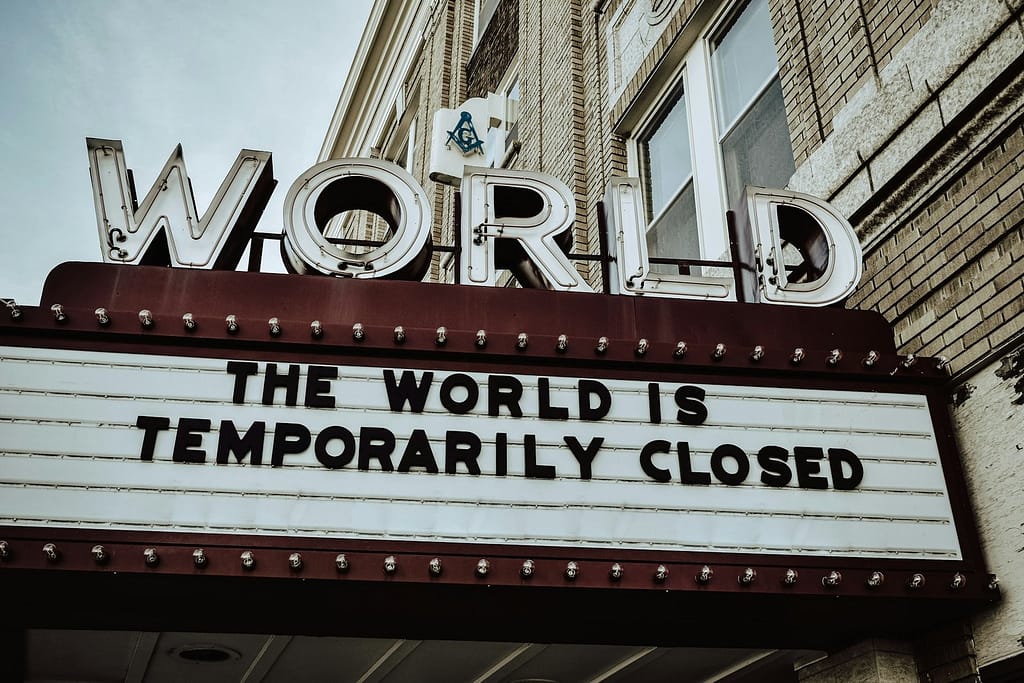
Modern life feels exhausting because society increasingly treats human beings like machines that should constantly optimise themselves. Productivity has become deeply tied to self-worth. Rest is framed as laziness unless it is “earned” through work first. Hobbies become side hustles. Creativity becomes content production. Healing becomes another self-improvement project people feel pressured to perfect.
There is always another thing people are told they should be doing.
Another certification.
Another promotion.
Another income stream.
Another productivity system.
Another self-help framework.
Another version of themselves they are expected to become.
Even the language surrounding work reflects this obsession with endless optimisation. Performance reviews, career progression, productivity metrics, networking and personal branding all reinforce the idea that value comes from continuous output (if you’ve ever scrolled LinkedIn, you know exactly what I’m talking about). None of these concepts are inherently evil on their own, but modern life feels exhausting when people slowly internalise the belief that existing is not enough unless they are constantly producing something measurable.
People spend decades climbing corporate ladders believing the next title, salary increase or promotion will finally create security or fulfilment, only to discover that exhaustion follows them upward. It starts feeling like we are climbing each stair in a house that never truly belonged to us in the first place.
And perhaps the most painful part is how disposable people often become inside these systems despite sacrificing years of their lives to them. Entire identities are built around workplaces that would replace individuals within weeks if necessary. People spend more time with coworkers than with their families, yet many still feel profoundly emotionally disconnected from the environments they dedicate their lives to sustaining.
Modern life feels exhausting because so many people are overworking themselves inside systems that rarely love them back.
This is different to having ambition and working for it to come to fruition. It’s more about one foot always being on the accelerator and one day you realise you missed the scenery altogether.
The Endless Consumption Of Modern Society
Another reason modern life feels exhausting is because modern society constantly encourages people to remain in states of wanting. We are surrounded by systems designed to keep desire permanently active. There is always another product, trend, aesthetic, experience or lifestyle being sold as the thing that will finally make people feel fulfilled.
Consumption no longer feels occasional. It feels embedded into existence itself.
You drive down the road and pass billboard after billboard telling you what you lack or need. Social media algorithms continuously push carefully engineered desires disguised as inspiration. Giant novelty snacks become viral because even food is now transformed into entertainment, marketing and stimulation. Entire industries profit from convincing people that fulfilment is permanently one purchase, transformation or lifestyle upgrade away.
Modern life feels exhausting because people are constantly consuming against their own will. Even silence has become difficult to access. There is always noise, advertising, urgency, content, trends or opinions competing for attention. I know for myself that every time I’m on Instagram, I’m bombarded with real estate and property ads telling me I’m losing the longer I stay out of the property market. Funny how they call it losing money when what they’re really making you feel is that you’re losing time.
And despite all of this consumption, many people still feel emotionally empty afterwards because wanting and fulfilment are not the same thing. We keep trying to fill the cup without realising the base is missing. Temporary excitement fades quickly before becoming part of the background noise of life again, so people continue chasing the next thing hoping it will finally create lasting satisfaction. Remember the Labubu hype? Yeah me neither.
But the emptiness many people feel cannot actually be solved through endless consumption because the void itself is often relational, emotional and existential.
People do not just want products.
They want meaning.
Connection.
Safety.
Community.
Belonging.
Presence.
A life that feels genuinely like their own.

Consciousness, Surveillance And Social Division
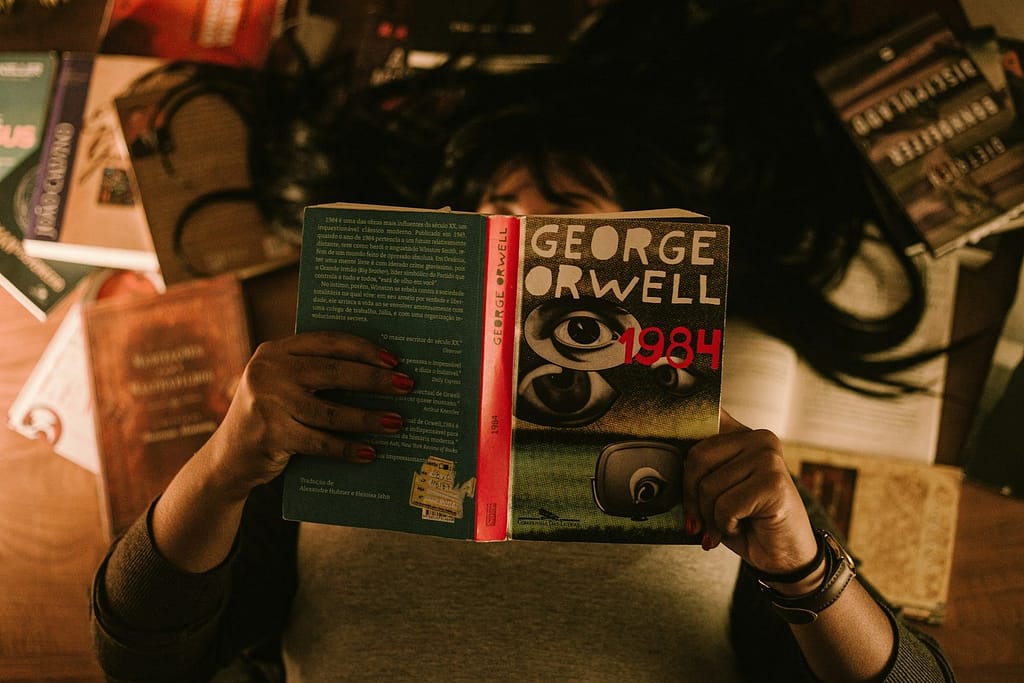
There is a George Orwell quote I have never forgotten:
“Until they become conscious they will never rebel, and until after they have rebelled they cannot become conscious.”
This quote has stuck with me ever since I read it, because to me it reflects reality. All the upholding points of the system: the competitiveness amongst one another in careers, the “need to have” things and trends, the attempts to distract/fill the void, survival itself becoming the system; all are the illusory but deeply ingrained factors which keep us unconscious so we never rebel.
We can’t rebel and change the system until we can become conscious, but becoming conscious requires us to rebel in the first place. It just made me feel like everything is an elaborated and decorated trap. We’re so dependent on the system itself that stepping outside of it becomes terrifying. And for others, the system gives enough benefits, enough comfort, enough identity and enough illusory security that there is no reason to question it at all – even if modern life feels exhausting as a result.
The crazy thing is, this book 1984 was written in 1949, but the concepts resonate even today. Surveillance is no longer science fiction (and maybe it wasn’t back then either). Cameras can capture crystal-clear images of people touching their phones while driving from incredible distances away. Algorithms track behaviour, preferences and emotional reactions constantly. Social media platforms profit from outrage because division generates engagement. Entire online spaces encourage people to view each other as enemies rather than recognising how many struggles are collectively shared.
Modern life feels exhausting because people simultaneously crave connection while existing inside systems that often rewards the opposite.
And perhaps one of the most painful realities is how helpless many people feel despite becoming increasingly aware of these dynamics. Even collective action often feels ineffective now. People recognise problems but feel too overwhelmed, financially strained or emotionally burnt out to meaningfully resist them. This in turn contributes to why modern life feels exhausting; unendingly so.
Why So Many People Feel Emotionally Stuck
Modern life feels exhausting because people are trying to survive externally while also healing internally at the exact same time. People are attending therapy, unpacking trauma, unlearning abusive conditioning, rebuilding their self-worth and trying to reconnect with themselves emotionally while still needing to participate in systems that deplete them.
There is very little space left for genuine recovery.
People know living on autopilot is harmful, yet many are too exhausted to know how to stop. That contradiction creates an especially painful form of emotional stuckness. Many people are not lazy or unmotivated. They are overwhelmed by the sheer amount modern existence demands from them psychologically.
Isn’t it crazy that despite all this we still feel like we are never doing enough? That we need to earn rest? That slowing down is a waste of time?
And underneath all of this is grief.
Grief for time passing.
Grief for lost community.
Grief for how human life now feels increasingly transactional.
Grief for the softer versions of existence people are no longer sure still exist.
When modern life feels exhausting, I notice a lot of people romanticising previous generations. Looking deeper, it seems less about wanting to literally live in the past and more about grieving what feels missing now: the perceived authenticity of connection, community, and a slower pace of life.
Modern life feels exhausting because many people can feel the gravity of life slipping by rapidly, while simultaneously lacking the energy required to fully reclaim it.
FAQ
Q: Why does modern life feel so exhausting lately?
Modern life feels exhausting for many people because life has become increasingly fast-paced, expensive, performative and emotionally demanding. Many people are trying to survive financially while also managing burnout, trauma, productivity pressure and constant overstimulation.
Q: Why do I feel emotionally numb or disconnected from life?
Emotional numbness can happen when people spend long periods functioning in survival mode or autopilot. When your energy is focused on simply keeping up, it becomes difficult to feel emotionally present inside your own life. While modern life feels exhausting, persistent emotional disconnection can sometimes point towards a deeper challenge, so I would encourage seeking professional support if these feelings are significantly affecting your wellbeing.
Q: Is it normal to feel stuck even when I’m trying my best?
Yes. Feeling stuck does not always mean you are lazy or failing. Sometimes it is a response to burnout, overwhelm, emotional exhaustion or living inside systems that continuously demand more from you.
Q: Why does time feel like it’s moving so fast now?
Many people feel disconnected from time because of the constant urgency, routines, distractions and pressure that surround us and becomes the reason for why modern life feels exhausting. When life becomes repetitive and emotionally depleting, weeks and months can begin blending together.
Q: Does feeling this way mean life is meaningless?
No. Feeling overwhelmed by modern life does not mean life itself lacks meaning. Often, it means people are longing for more connection, presence, purpose and humanity than modern systems currently allow space for.
What’s Next
If modern life feels exhausting right now, I do not think the answer is becoming more productive, more optimised or more emotionally perfect. I think many people are already carrying more than they were ever meant to hold alone.
Maybe the next step is not fixing yourself overnight.
Maybe it is slowing down enough to notice your own life again. If you want to read more about the how behind this, you may find my post How to Enjoy Life More grounding, where I share practical ideas for reconnecting with yourself.
Maybe it is protecting the parts of yourself that still feel human in a world that often rewards numbness. Maybe it is reconnecting with people instead of constantly competing with them. Maybe it is allowing yourself to admit that you are tired without immediately turning that exhaustion into another self-improvement project.
Modern life feels exhausting because people are trying to protect their humanity inside conditions that slowly drain it from them.
So sometimes it isn’t about resisting or escaping entirely, but finding ways to make existing within these structures feel lighter on your heart.
And that does not mean we are failing.
Maybe it means we are human beings reacting normally to systems that quietly ask too much from the human spirit.
And maybe, most importantly, it is remembering that despite how disconnected modern life can feel, there are still moments of humanity everywhere if you pause to see it.
The fact that so many people resonate with these feelings does not mean humanity is lost. If anything, it proves how deeply people still long for something real.
If these ideas resonated with you, you may also find my post Who Are You Really? How to Find Yourself Beyond the Illusion thought-provoking, where I explore identity, conditioning and the parts of ourselves we mistake as fixed.
Remember, the goal is not becoming perfectly productive, perfectly healed or perfectly optimised.
Maybe the goal is simply refusing to become completely numb before life passes us by.
Disclaimer
I am not a mental health professional, and this post is not a substitute for professional care or diagnosis. The reflections, perspectives, anecdotes and suggestions shared here are intended for discussion and personal reflection only, and are not intended to replace therapy, medication or medical advice. If you are struggling, in distress, or finding that these feelings are significantly affecting your wellbeing, please reach out to a qualified professional or trusted support service.


