

Many people struggle with emotional boundaries without recognising it. They become the friend everyone relies on, the family member who holds everything together, or the partner who prioritises everyone else’s needs ahead of their own. While these behaviours are often praised as caring, supportive, and selfless, they can quietly become exhausting over time.
If you’ve ever felt responsible for keeping the peace, fixing problems, managing conflict, or making sure everyone around you is okay, weak emotional boundaries may be playing a bigger role than you realise.
The challenge with boundaries is that they can feel selfish when you’ve spent years measuring your worth through what you do for other people. You may feel guilty saying no, uncomfortable disappointing others, or responsible for emotions that were never yours to carry in the first place. As a result, boundaries often become blurred, making it difficult to tell where your responsibilities end and someone else’s begin.
Learning how to strengthen your boundaries is not about becoming cold, detached, or uncaring. It’s about understanding the difference between support and self-sacrifice, recognising the signs of emotional enmeshment, and creating healthier relationships with family, friends, and romantic partners. This guide will help you build stronger emotional boundaries so you can care about people without carrying them.
Guide Overview
The difficult thing about weak emotional boundaries is that they rarely feel unhealthy while you’re living them. They often feel like kindness, loyalty, responsibility, maturity, or love. You may not realise how much emotional weight you’re carrying until you become exhausted by it.
If you’ve ever felt guilty for disappointing someone, responsible for keeping the peace, or uncomfortable prioritising your own needs, this guide is for you. Building emotional boundaries is not about caring less about other people. It’s about learning that someone else’s emotions can matter without becoming your responsibility.
This post may contain affiliate links. If you make a purchase through them, I may earn a small commission at no extra cost to you.

Table of Contents
1. Understand What Emotional Boundaries Actually Are
Before you can build emotional boundaries, it helps to understand what they are.
Many people assume boundaries are walls. They imagine someone becoming distant, unavailable, or unwilling to help others. In reality, boundaries are not walls at all. They are lines of responsibility.
Healthy emotional boundaries allow you to recognise that another person’s emotions belong to them, even when you care deeply about them. You can support someone through disappointment without believing it is your job to fix it. You can empathise with someone’s pain without carrying it home with you.
Without emotional boundaries, it becomes easy to confuse caring with responsibility. Someone else’s sadness feels like your problem to solve. Someone else’s anger feels like evidence that you have done something wrong. Someone else’s happiness becomes your responsibility to maintain.
Over time, this can become exhausting because you are attempting to manage experiences that were never yours to manage in the first place.
2. Recognise How Emotional Enmeshment Develops
Many struggles with emotional boundaries begin long before adulthood.
In some families, children are taught to pay close attention to other people’s emotions. They learn to anticipate conflict, smooth over tension, and prioritise the needs of others. While these behaviours often develop as adaptive survival strategies, they can quietly follow people into adulthood.
Emotional enmeshment occurs when emotional boundaries become blurred and individual feelings are no longer experienced as separate. A child’s mood may become heavily influenced by a parent’s emotions. A family member may feel responsible for everyone’s wellbeing. Personal needs become secondary to maintaining harmony.
The difficult part is that emotional enmeshment is often rewarded.
The child who never causes problems is praised for being mature. The teenager who supports everyone else is praised for being caring. The adult who sacrifices constantly is praised for being selfless.
What rarely gets discussed is the cost.
When emotional boundaries are consistently ignored, people often lose touch with their own needs, preferences, emotions, and limits. They become highly skilled at monitoring others while struggling to understand themselves.
Personal Experience
This is a concept I can relate to very well myself. I grew up learning that the minimisation of my needs and autonomy meant I was good, that sacrifice and silent suffering allowed for peace, and that I had to regulate my own emotions no matter how cruel the person in front of me was.
I also grew up watching everything be swept under the rug. This behaviour was normalised and, in many ways, rewarded. It was a house of secrets. No matter what happened or how it impacted me, I was expected to keep it quiet and avoid disrupting the family dynamic.
I also played the role of parent to my parents whenever conflict occurred. I started to feel like all conflict was my responsibility to resolve. If someone was upset, I would adapt to their mood and needs. If my parents fought, I would comfort them both. If I was upset, I would hide my emotions because they were considered disruptive and I was simply “too sensitive.”
This pattern eventually followed me into my friendships and relationships. I would overlook things I now end relationships for. I would put extraordinary effort into being thoughtful, accommodating, and mindful of everyone else’s needs, even when that effort wasn’t returned. I would tolerate disrespect.
The difficult part is that I didn’t realise anything was wrong, because I couldn’t see that it was. These patterns felt normal because they were familiar. It wasn’t until I started learning about emotional boundaries, emotional enmeshment, and people-pleasing that I began to understand why I felt responsible for everyone else all the time.
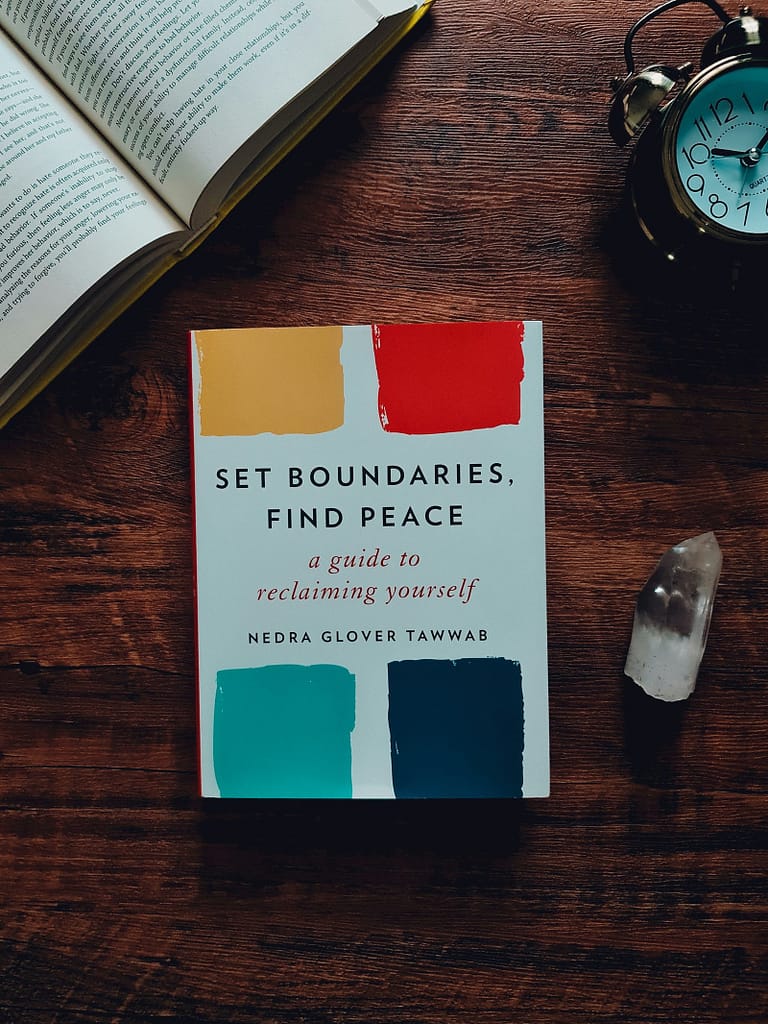
The book that started me on this journey and helped me understand these dynamics more clearly was Set Boundaries, Find Peace. It was one of the first resources that helped me see that caring about people and taking responsibility for them are not the same thing.
When I read this book for the first time, I felt so seen; like my experiences were validated. I cried realising how much of it was normalised my entire life, and how many years I had lost to carrying other people. Nedra went on to release a second book called Drama Free: A Guide to Managing Unhealthy Family Relationships, which built on many of these concepts and helped me more clearly identify some of the dysfunctional patterns within my own family.
3. Notice How Emotional Boundaries Become Blurred in Family Relationships
Family relationships are often where emotional boundaries feel the most challenging.
You may feel responsible for your parents’ happiness. You may avoid making decisions that disappoint family members. You may feel guilty whenever you prioritise your own needs over family expectations.
Many people with weak emotional boundaries carry an invisible belief that says:
“If someone I love is upset, I need to do something about it.”
The problem is that emotional discomfort is a normal part of life. Parents may feel disappointed. Siblings may disagree with your choices. Family members may wish you would do things differently.
None of those experiences automatically mean you have done something wrong. However, this becomes even more difficult to recognise when a cultural layer is added and enmeshment is deep rooted within these dynamics.
Healthy emotional boundaries allow family members to have their own emotional reactions without requiring you to absorb them. This can feel deeply uncomfortable at first because many people mistake guilt for evidence that they are doing something harmful.
In reality, emotional boundaries often feel uncomfortable simply because they are unfamiliar.
Unfortunately, implementing emotional boundaries within families can sometimes change relationships in ways we didn’t expect. In some cases, family members may struggle to adjust to new boundaries, particularly if they benefited from the absence of them.
While healthy emotional boundaries can strengthen many relationships, they can also expose dynamics that were only functioning because one person was consistently overextending themselves. Occasionally, this can lead to distance, conflict, or even the breakdown of certain relationships.
If family dynamics are a significant source of difficulty for you, I highly recommend reading Adult Children of Emotionally Immature Parents is a book that comes highly recommended and is currently on my own reading list. The book explores how emotionally immature parents can unintentionally create environments where children become responsible for managing emotions, keeping the peace, or prioritising other people’s needs above their own. For many people, these patterns continue well into adulthood and can make healthy emotional boundaries feel uncomfortable, unfamiliar, or even wrong.
4. Notice How Emotional Boundaries Become Blurred in Friendships
Friendships can also become a place where emotional boundaries quietly disappear.
You might become the person everyone calls during a crisis. The friend who always listens. The friend who always helps. The friend who always understands.
While these qualities are valuable, problems arise when support becomes one-sided.
People with weak emotional boundaries often feel guilty saying no. They may answer messages while exhausted, rearrange their schedules to accommodate everyone else, or feel responsible for solving problems that are far beyond their control.
Over time, friendships can start to feel draining rather than supportive.
Strong emotional boundaries do not mean abandoning people when they need help. They mean recognising that you can care about someone’s struggles without becoming responsible for managing them. They allow friendships to remain supportive without becoming emotionally consuming.
One of the most important questions you can ask yourself is:
“Am I supporting this person, or am I carrying them?”
The answer often reveals whether emotional boundaries are present or whether emotional responsibility has quietly taken their place.
5. Learn the Difference Between Support and Self-Sacrifice
One of the biggest obstacles to building emotional boundaries is that many people confuse self-sacrifice with love.
On the surface, sacrifice can look caring. You put someone else’s needs first. You tolerate things that hurt you. You ignore your own limits to make life easier for another person. Because these actions are often praised, it can be difficult to recognise when they become unhealthy.
Support and self-sacrifice are not the same thing.
Support says:
“I care about you.”
Self-sacrifice often says:
“I will abandon myself for you.”
The difference matters because healthy relationships require two people to exist within them. When one person’s needs consistently disappear, resentment, exhaustion, and emotional depletion often follow.
Strong emotional boundaries allow you to support people without losing yourself. They allow you to be present without becoming responsible. They allow you to care without constantly paying for that care with your own wellbeing.
Many people discover that they are not actually afraid of having emotional boundaries. They are afraid of what might happen if they stop sacrificing themselves.

6. Recognise How Emotional Boundaries Affect Romantic Relationships
Romantic relationships can make weak emotional boundaries particularly difficult to identify because many unhealthy behaviours are often disguised as love.
You may find yourself constantly monitoring your partner’s mood. You might feel responsible for keeping the relationship stable, preventing conflict, or ensuring your partner remains happy. Their disappointment becomes your failure. Their stress becomes your burden. Their emotions become your responsibility.
At first, this can feel like devotion.
Over time, however, it often becomes emotionally exhausting.
Healthy emotional boundaries create space for both people to have their own emotional experiences. One partner can have a difficult day without the other needing to fix it. One partner can feel frustrated without the relationship becoming unsafe. One partner can experience disappointment without someone immediately rushing in to remove it.
When emotional boundaries are absent, relationships can become emotionally fused. Instead of two separate individuals sharing a relationship, people begin managing one another’s internal experiences.
The result is often anxiety rather than intimacy.
Ironically, emotional boundaries frequently create stronger relationships because they allow both people to show up authentically rather than performing emotional caretaking roles.
7. Stop Treating Other People’s Feelings as Evidence You Have Done Something Wrong
Many people struggle with emotional boundaries because they interpret emotional reactions as moral feedback.
Someone is disappointed.
You assume you have failed.
Someone is upset.
You assume you have done something wrong.
Someone disagrees with your decision.
You assume you need to change it.
This pattern creates a life where your choices are constantly filtered through other people’s emotional responses.
One of the most important lessons in developing emotional boundaries is learning that discomfort is not the same thing as harm.
A friend may be disappointed that you cannot attend an event.
A parent may dislike a decision you have made.
A partner may wish things were different.
None of these experiences automatically mean you have behaved badly.
Healthy emotional boundaries allow people to have their own emotional responses without requiring you to rescue them from every uncomfortable feeling. This can feel uncomfortable initially because many people have spent years measuring their worth through other people’s reactions.
The reality is that people are allowed to have feelings about your choices. Emotional boundaries simply remind us that those feelings do not always require action.
8. Expect Guilt When You First Build Emotional Boundaries
One of the reasons emotional boundaries feel so difficult is that guilt often appears before confidence does.
Many people assume that if something feels guilty, it must be wrong.
If you have spent years prioritising everyone else’s needs, emotional boundaries may initially feel selfish, harsh, or uncomfortable. You may worry that you are letting people down. You may question whether you are becoming uncaring.
I remember when I first started implementing emotional boundaries, the guilt felt crippling. I felt like a bad person. A selfish person. Every time I prioritised my own needs or disappointed someone, I questioned whether I was doing the right thing.
If you’re experiencing similar feelings, don’t let them stop you. Often, this is simply the discomfort of doing something new. It can also be a part of you trying to protect yourself from unfamiliar change, especially when that change has the potential to disrupt long-established relationship dynamics.
The reality is that some relationships may fall away when you start enforcing emotional boundaries. Not because you have become cruel or uncaring, but because certain relationships were built around your willingness to overextend yourself. This shift can be painful, but it can also be revealing.
I remember when I first started using my voice and enforcing boundaries, a family friend said to me, “You’ve changed.” It stung at first. It was uncomfortable and a little scary. But deep down, I knew they were right. I had changed. I was no longer abandoning myself to keep everyone else comfortable.
Guilt is often part of the process. It does not need to become the decision-maker.

9. Practise Emotional Boundaries in Small Ways First
Building emotional boundaries does not require a dramatic confrontation or a complete life overhaul.
In fact, small changes are often more sustainable.
You might start by:
- Waiting before immediately solving someone’s problem.
- Saying no without providing a lengthy explanation.
- Allowing a text message to wait until you have energy to respond.
- Asking yourself whether a problem genuinely belongs to you.
- Checking in with your own needs before automatically prioritising someone else’s.
These small actions help strengthen emotional boundaries over time.
Like any skill, emotional boundaries become easier through practice. The goal is not perfection. The goal is creating enough separation that you can remain compassionate without becoming emotionally overwhelmed.
FAQ
Q: Are emotional boundaries selfish?
No. Emotional boundaries help clarify responsibility within relationships. They allow you to care about people without becoming responsible for their emotions, decisions, or wellbeing.
Q: What if someone gets upset when I set emotional boundaries?
People are allowed to have emotional reactions to your boundaries. Emotional boundaries do not guarantee approval from others. They simply help ensure your decisions are not entirely controlled by other people’s feelings.
Q: Can emotional boundaries improve relationships?
Yes. Healthy emotional boundaries often improve communication, reduce resentment, and create stronger relationships because people are relating as individuals rather than emotional caretakers.
What’s Next?
Learning to build emotional boundaries is not about becoming detached from the people you love. It is about learning that care and responsibility are not the same thing. You can support someone without saving them. You can empathise without absorbing. You can love someone without abandoning yourself.
If this topic resonated with you, you may also find it helpful to explore my post on Hyper independence vs Individualism, particularly if asking for help feels uncomfortable or unfamiliar. You may also benefit from learning more about Intuition vs Conditioning, especially if guilt often influences your decisions more than your genuine wants and needs.
Most importantly, remember this: carrying everyone else is not proof of love. Constant sacrifice is not proof of care. Sometimes the most compassionate thing you can do is trust that other people are capable of carrying their own emotions while you carry your own.


Pingback: What Is the Difference Between Helping and Fixing in 2026? An Honest Guide - rnworld