

People rarely talk about what healing looks like in reality, because healing is often described from the other side of it.
We hear about the moment someone finally chose themselves, learned to set boundaries, stopped returning to what hurt them, found peace, trusted again, or became the person they always needed. Looking backwards, healing can appear surprisingly linear. There was pain, there was growth, and eventually, there was something better.
Living through it rarely feels that clean.
Sometimes what healing looks like is crying about something you thought you had already processed. It is knowing exactly why you are triggered and still being triggered anyway. It is repeating a pattern you promised yourself you would never repeat, questioning whether you have made any progress at all, and wondering why something you understand so well still has the ability to hurt you.
Sometimes healing feels less like becoming whole and more like repeatedly discovering all the places that still hurt.
That can be incredibly discouraging.
When you have spent months or years trying to understand yourself, it is easy to believe that progress should eventually make difficult emotions disappear. You might expect yourself to react differently by now. You might feel embarrassed when an old fear resurfaces or frustrated when you find yourself seeking reassurance, overthinking, shutting down, people-pleasing, becoming defensive, or returning to whatever behaviour once helped you feel safe.
But knowing what healing looks like requires looking beyond whether an old reaction appeared.
Sometimes the reaction is still there, but what happens around it has completely changed.
You recognise it sooner. You understand where it comes from. You regulate yourself instead of allowing it to consume the rest of your day. You apologise when your pain spills onto someone else. You question the story your fear is telling you. You allow yourself to cry without deciding the tears mean everything is falling apart. You make a choice that scares you instead of automatically running towards whatever offers immediate relief.
And sometimes, you do none of those things particularly well.
You spiral. You react. You fall back into an old habit. You need reassurance. You avoid something for longer than you wanted to. You have a terrible day.
Then, somehow, you come back.
That counts too.
Understanding what healing looks like means making room for the uncomfortable reality that healing does not always feel like progress while you are living through it. Sometimes the progress is not that you stopped struggling. It is that struggling no longer has the power to completely derail your life.
Guide Overview
There is a version of healing that is easy to celebrate because it looks like transformation. You become more confident, make healthier choices, leave painful situations behind and feel noticeably different from the person you once were.
There is another version that is much quieter.
It happens in the space between being triggered and responding. It happens when you catch yourself halfway through an old pattern. It happens when you have the same fear but no longer make every decision from inside it. It happens when you stop treating difficult emotions as instructions and start learning how to experience them without allowing them to dictate what happens next.
This guide explores what healing looks like when you are still very much inside the process. Not when everything feels peaceful, certain or resolved, but when you are crying, doubting yourself, repeating old behaviours, taking steps backwards and continuing anyway.
Because sometimes progress is not becoming unaffected.
Sometimes progress is becoming less controlled by what affects you.
Table of Contents
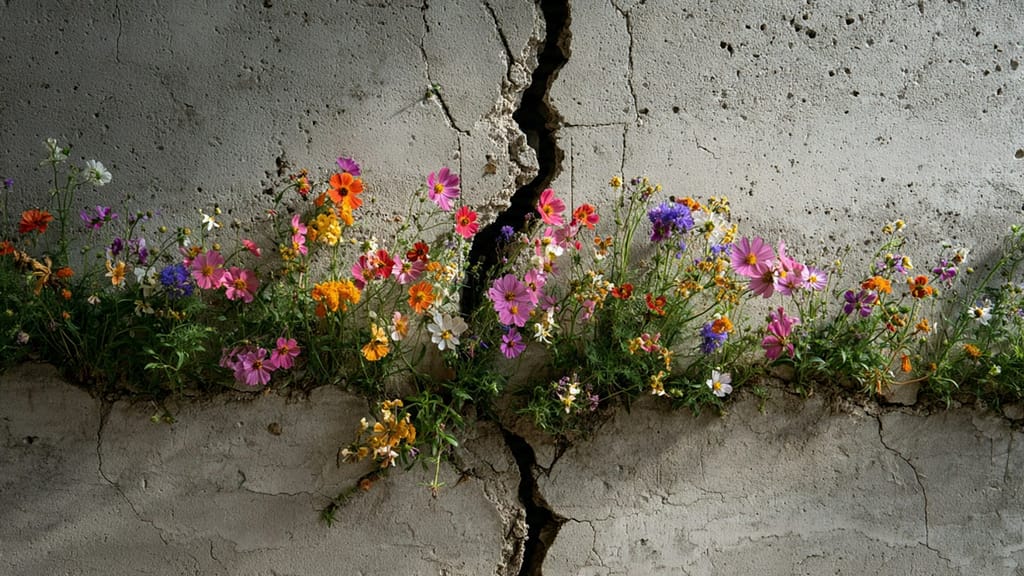
What Healing Looks Like Is Not Always What Healing Feels Like
One of the hardest things about healing is that progress and pain can exist at the same time. You can be healthier than you were a year ago and still have an awful week. You can understand your triggers and still react to them. You can know that a fear comes from the past while your body responds as though the threat is happening right now.
This is part of why recognising what healing looks like can be so difficult from the inside. We tend to measure progress by how we feel. If we feel calm, we assume we are doing well. If we feel anxious, heartbroken, angry, jealous, frightened or overwhelmed, we assume something has gone wrong.
But emotions are not always measurements of progress.
Feeling hurt does not necessarily mean you have gone backwards. Feeling afraid does not mean you have failed to become secure. Crying about something again does not erase every time you handled it differently before. Healing can actually make certain things feel more uncomfortable for a while because you are no longer avoiding them in the same way.
Perhaps you used to disappear when relationships became difficult. Now you stay and have the conversation. Perhaps you used to suppress everything until you felt nothing. Now you allow yourself to grieve. Perhaps you used to seek immediate certainty whenever anxiety appeared. Now you are trying to tolerate not knowing.
None of those experiences necessarily feel better in the moment, and sometimes what healing looks like is remaining present with something that the old version of you would have escaped.
That is difficult precisely because your familiar coping mechanisms probably existed for a reason. They protected you, distracted you, soothed you or gave you a temporary sense of control.
Learning not to automatically reach for them can leave you face-to-face with the feelings they once helped you avoid.
Healing may therefore feel worse before it feels safer.
Not because you are doing it incorrectly, but because feeling something and learning how to move through it is very different from making it disappear.
Healing Does Not Mean You Never Repeat an Old Pattern
There is a particular kind of disappointment that comes from recognising yourself doing something you thought you had already outgrown. Maybe you overthink again. You seek reassurance again. You become defensive. You shut down. You return to someone. You procrastinate. You catastrophise. You abandon a boundary. You start monitoring something you know makes you anxious.
The immediate thought is often: I am back at the beginning. But understanding what healing looks like means paying attention to more than whether a behaviour happened.
Ask what happens next.
Do you recognise the pattern after three months, or after three hours? Do you spend a week believing every anxious thought, or are you beginning to question them? Do you continue escalating the situation, or eventually notice that you need to regulate yourself? Do you punish yourself for slipping, or can you become curious about what made the old coping mechanism feel necessary again?
The pattern might look familiar while your relationship with it is completely different.
You may still become dysregulated, but perhaps you recover faster. You may still need reassurance, but perhaps you can eventually reassure yourself. You may still avoid something initially, but perhaps you return instead of abandoning it entirely. That is what healing looks like sometimes: not the disappearance of your wiring, but an increasing ability to work with it.
Old patterns can become particularly loud during periods of stress, grief, uncertainty or change. That does not automatically mean all of your growth has vanished. Human beings do not graduate from coping mechanisms and become permanently immune to them.
You can know better and still struggle to do better when you are overwhelmed. The important part is not achieving a perfect record. It is developing the capacity to notice, repair, regulate, learn and return.
And sometimes certain protective mechanisms may actually be useful. For example, if you have to spend holidays with certain family members who have hurt you in the past, then disconnecting while you have to be in that situation allows you to get through it. If this example resonates, you can learn about some alternative regulation methods in my post How to Navigate the Holiday Stress.
Sometimes patterns or coping mechanisms can be transmuted to work for you instead of against you.
Sometimes Healing Looks Like Falling Apart Without Letting It Destroy Everything Else
There may still be days when you fall apart. You might cry until your head hurts. You might spend an evening overthinking. You might need someone to sit with you. You might feel exhausted by your own emotions and wish you could switch your brain off for a while.
None of that is particularly inspirational.
But what healing looks like is not necessarily never falling apart again. Sometimes it is learning that falling apart does not require everything around you to fall apart too.
You can have a painful night and still go to work tomorrow. You can experience rejection without deciding you are fundamentally unlovable. You can have conflict with someone you love without immediately deciding the relationship is doomed. You can feel frightened about your future without abandoning every plan you made for it.
The emotion can be enormous without becoming the entire truth about your life. That distinction matters.
When you are deeply dysregulated, the feeling can become the story. Fear says something terrible is about to happen. Shame says you have ruined everything. Grief says you will always feel this way. Anxiety says you need an answer immediately.

Healing creates a little more space between the feeling and the conclusion.
At first, that space may be tiny. Maybe all you can manage is, “I feel like everything is falling apart, but I know feelings can become very convincing when I am overwhelmed.”
That is still space. Over time, what healing looks like may be the ability to let yourself have the breakdown without making permanent decisions from a temporary emotional state.
You cry.
You rest.
You regulate.
You come back.
The pain was real. The progress was too.
You Will Probably Doubt Your Healing While You Are Healing
Self-doubt does not politely disappear once you begin working on yourself. In fact, increased self-awareness can sometimes create more doubt.
Once you become aware of your patterns, you start noticing them everywhere. You recognise your triggers, defence mechanisms, attachment wounds, avoidance, projections and emotional habits. Suddenly, you have an entire vocabulary for everything you might be doing wrong.
That awareness can be useful, but it can also become another way of scrutinising yourself.
You start asking whether your feelings are valid or merely a trigger. Whether you are setting a boundary or avoiding discomfort. Whether you are protecting yourself or self-sabotaging. Whether your intuition is speaking or anxiety is speaking.
This uncertainty can make it difficult to recognise what healing looks like because you may expect healing to produce complete clarity. Often, it does not. Sometimes healing means making the best decision you can without being completely certain.
It means listening to yourself while accepting that you can misinterpret things. It means taking responsibility without automatically assuming everything is your fault. It means considering other perspectives without abandoning your own.
You may still ask yourself, “Am I doing the right thing?” The difference is that you gradually become less dependent on absolute certainty before you are willing to move.
There is no version of healing that makes you omniscient. You will still misunderstand situations. You will still make choices you later reconsider. You will still have moments when fear sounds exactly like intuition and moments when you cannot immediately tell the difference.
What healing looks like is building enough trust in yourself to know that even if you make the wrong choice, you can respond to what happens next. You do not need perfect foresight to become someone you can rely on.
Healing Can Look Like Staying When Your Instinct Is to Run
Not every difficult situation should be endured. There are relationships, environments and circumstances where leaving is an act of protection. But sometimes we run not because something is necessarily wrong, but because uncertainty itself feels unbearable.
Running can take many forms.
It can mean ending something before someone else has the opportunity to hurt you. Avoiding a conversation because you are terrified of the answer. Emotionally detaching before you know whether you are actually unsafe. Abandoning a goal because struggling makes you feel incapable. Convincing yourself you no longer care because caring makes you vulnerable.
When escape has historically created safety, staying present can feel terrifying. This is another reason why what healing looks like may not feel peaceful. Sometimes healing is staying long enough to find out what happens.
It is having the conversation. Waiting for more information. Allowing someone the opportunity to respond. Sitting with uncertainty without desperately trying to manufacture certainty. Continuing with something meaningful even when discouragement tells you to abandon it. It is learning that discomfort and danger are not always the same thing.
Again, this does not mean teaching yourself to remain in situations that consistently harm you. Healing is not an obligation to tolerate mistreatment, betray your boundaries or prove how much discomfort you can withstand. It means becoming more capable of distinguishing between something that is hurting you and something that is simply hard.
What healing looks like may be leaving when leaving is necessary. It may also be staying when your fear is begging you to run. Both require learning how to hear yourself underneath the panic.
Progress Can Be Measured by How You Regulate, Repair and Return
If you only measure healing by whether you became triggered, you may miss enormous amounts of progress. A more useful question might be: what do I do when I become triggered now?
Perhaps you still spiral, but you recognise the spiral before acting on every thought it produces. Perhaps you still become angry, but you return and repair after saying something unfair. Perhaps you still shut down, but you can eventually explain what happened instead of disappearing completely. This is often what healing looks like in everyday life.
Regulation does not necessarily mean immediately becoming calm. It can mean noticing that your body is overwhelmed and giving yourself time before responding. It can mean allowing the first wave of emotion to pass before making a decision.

Repair means accepting that healing will not prevent you from affecting other people. You are still responsible for your behaviour, even when that behaviour came from pain. Healing gives you more capacity to acknowledge what happened, apologise where necessary and try something different next time.
Returning might be the most overlooked part.
You return to the conversation. You return to your routine. You return to the project you neglected. You return to yourself after spending three days believing something painful about who you are. You do not make one difficult moment your permanent address.
Knowing what healing looks like means noticing how much easier it becomes to find your way back. Perhaps it once took you months. Then weeks. Then days.
Sometimes it still takes weeks again. Progress does not need to move at the same speed forever to remain progress.
Taking a Step Back Does Not Put You Back at the Beginning
Healing is often described as non-linear, but it can be difficult to extend that belief to ourselves when we actually experience a setback. We are much more compassionate with the idea in theory. In reality, a setback can feel devastating.
You thought you were stronger than this. You thought you had moved past it. You thought you would respond differently. Suddenly, every piece of progress that came before seems irrelevant.
But one difficult reaction cannot transport you backwards through time. You cannot unknow everything you have learned. You cannot become the exact person you were before experiencing everything that changed you.
This is important when considering what healing looks like over a longer period. A setback occurs inside the person you are now, not the person you were then.
You bring more awareness into it. More experience. More language. More evidence that you have survived difficult periods before. Even if you cannot access all of that knowledge immediately, it still exists. Sometimes healing requires revisiting the same lesson from a different place.
The same abandonment fear might appear in a new relationship. The same insecurity might surface when the stakes become higher. The same urge to escape might return when you finally have something you are terrified of losing.
That does not necessarily mean you failed to learn the lesson before. It may mean life has found a deeper place where the lesson needs to be practised. What healing looks like is rarely a straight line away from pain. It can be more like meeting familiar pain with an increasingly expanded version of yourself.
What Healing Looks Like When You Keep Going Anyway
There is something profoundly unglamorous about continuing. Sometimes there is no breakthrough.
You simply wake up and try again.
You still feel uncertain about something you desperately want certainty about. You still have a wound you wish you had healed by now. You still have days when you are tired of working on yourself and would like your brain to stop turning everything into an opportunity for personal growth.
And yet, you continue.
This may be one of the most important parts of what healing looks like. You stop requiring yourself to feel fearless before you participate in your own life.
You apply for something while afraid of rejection. You love someone while knowing love cannot guarantee you will never be hurt. You set a boundary while worrying someone might dislike it. You start writing again after disappearing from something that mattered to you. You make plans even though you do not know exactly what your life will look like six months from now.
You let fear come with you without always allowing it to drive. Some days it will still grab the steering wheel. Some days you will have to pull over. Some days you will wonder whether you are getting anywhere at all. But then you notice that your life is no longer organised entirely around avoiding whatever might hurt.
That is what healing looks like too.
Not sunshine and rainbows. Not permanent emotional regulation. Not reaching some enlightened version of yourself who never cries, doubts, reacts, regresses or needs another person. It is becoming someone who can experience those things without automatically abandoning themselves. It is discovering that you can be scared and stay. Hurt and communicate. Triggered and repair. Uncertain and continue. Discouraged and return.
It is learning that a difficult emotion can be something you experience rather than somewhere you have to live.
FAQ
Q: What does healing actually look like?
What healing looks like varies between people, but it often involves changes in how you respond to difficult emotions rather than the complete disappearance of those emotions. You may still experience fear, sadness, insecurity, anger or old triggers while becoming better able to recognise, regulate and respond to them without allowing them to control your entire life.
Q: How do I know if I am healing if I still get triggered?
Being triggered does not automatically mean you are not healing. Pay attention to what happens before, during and after the trigger. You may recognise what is happening sooner, recover more quickly, communicate differently, avoid acting impulsively or show yourself more compassion afterwards. Sometimes what healing looks like is a change in your response rather than a change in what initially activates you.
Q: Is it normal to repeat old patterns while healing?
Yes. Recognising an old pattern does not guarantee you will immediately stop repeating it, particularly during periods of stress or uncertainty. What matters is whether your awareness and ability to interrupt, repair or recover from the pattern are changing. Healing is not proven by perfection.
Q: Does taking steps backwards mean I have lost my progress?
A setback does not erase everything that happened before it. You can struggle with something you previously handled well and still retain the awareness, skills and experiences you developed along the way. Part of understanding what healing looks like is learning not to measure your entire journey by your most difficult day.
Q: Why can healing feel worse sometimes?
Healing can feel painful because you may be confronting emotions, memories, fears or patterns you previously avoided. Changing familiar coping mechanisms can also create uncertainty, even when those mechanisms were no longer serving you. Feeling uncomfortable does not automatically mean something is going wrong.
What’s Next?
Perhaps you are reading this while wondering whether you are actually getting better.
Maybe you have cried about the same thing again. Maybe you reacted in a way you are not proud of. Maybe something you thought you had healed suddenly hurts as though it happened yesterday. Maybe you are exhausted by the amount of effort it seems to take to remain grounded when part of you desperately wants to run, shut down or find certainty somewhere outside yourself.
If so, remember that what healing looks like cannot always be measured by whether you hurt. Look at what you do with the hurt.
Look at whether you are beginning to understand yourself instead of immediately judging yourself. Look at the moments when you regulate before reacting, and the moments when you react but come back to repair. Look at the situations you no longer abandon simply because they frighten you. Look at the difficult days that once would have swallowed entire months of your life.
And give some weight to the fact that you are still here.
Healing does not have to turn your world into sunshine and rainbows to be real. You do not need to become impossible to trigger, impossible to hurt or perfectly secure in every part of yourself.
Sometimes what healing looks like is much less dramatic.
You feel it. You wobble. You doubt yourself. You cry. You fall backwards. You catch yourself.
You try again.
And slowly, the things that once had the power to derail your entire life become things you know how to move through. Maybe healing is not becoming someone who never hurts this way again. Maybe it is becoming someone who knows how to stay beside themselves when they do.


