
Understanding your skin is the foundation of building a routine that actually works. Most people jump into skincare without knowing what their skin truly needs, which often leads to irritation, breakouts, dryness, or products simply not doing anything at all.
When you determine your skin type properly, everything becomes easier. Choosing products becomes simpler, knowing what to avoid becomes clearer, and you start to understand your skin’s patterns rather than feeling confused when something suddenly isn’t working. What many people don’t realise is that skin isn’t static. It shifts with weather changes, hormones, stress, your environment, and even how much water you drink.
This means learning how to determine your skin type is not a one-time event, but an ongoing way of listening to your skin. This guide explains exactly how to figure out your skin type, what physical signs to look for, how environmental factors influence it, and why your skin may behave differently throughout the year.
Guide Overview
This guide walks you through the essential steps needed to determine your skin type accurately. First, you’ll learn how to assess your skin with the bare-face test. Then, you’ll observe oil production throughout the day. Next, you’ll learn how texture, sensitivity, and hydration levels help determine your skin type more precisely. You’ll explore how weather and seasonal changes affect your skin. Finally, you’ll assess how your skin responds to everyday products and routines. By the end, you’ll understand how to determine your skin type in a practical, realistic way that aligns with how your skin behaves daily.
Table of Contents
1. Determine Your Skin Type By Conducting the Bare-Face Test
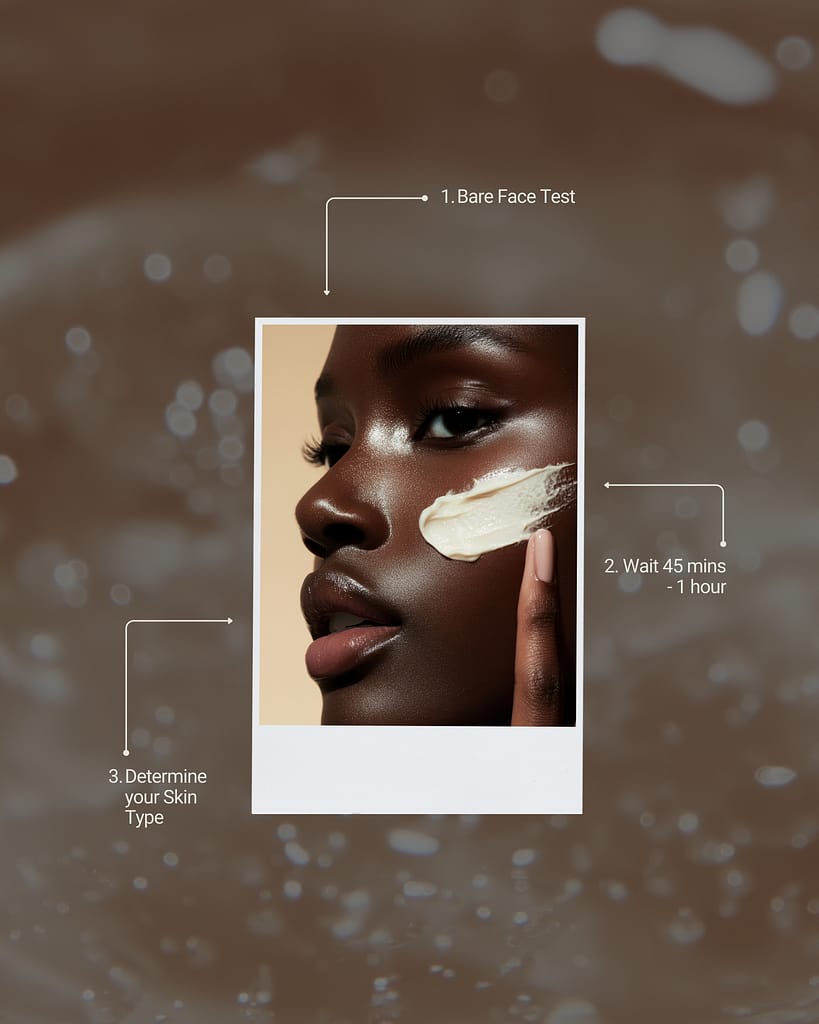
Start by washing your face with a gentle, non-stripping cleanser. If you’d like extra guidance, I’ve shared my beginner skincare essentials and simple cleanser recommendations in The Best Skincare for Beginners – The Only 3 Essentials You Truly Need. Avoid exfoliants, toners, or anything that alters your natural oils. After cleansing, pat your skin dry and leave it completely bare for 45 minutes to an hour. During this time, your skin returns to its natural state, which gives you the clearest picture when you try to determine your skin type. Usually if you have dry skin and a damaged skin barrier, you will be able to determine your skin type a lot sooner.
After the waiting period, examine your skin closely in natural lighting. If your skin feels tight, uncomfortable, or has visible flaking, it may be dry. If your T-zone looks shiny while the rest of your face feels balanced, you might have combination skin. If shine appears across your forehead, nose, chin, and cheeks, your skin may be oily.
If your skin feels calm, comfortable, and neither oily nor tight, it may be normal (lucky you!). The bare-face test is one of the simplest and most reliable methods used to determine your skin type because it reveals your baseline without the influence of product formulas.
It’s important to remember that this is just a baseline test, your skin could also be sensitive regardless of whether you have dry, oily or combination skin. Sensitivity means your skin is reactive and struggles to tolerate a range of products without irritation. This can show up as burning, stinging, redness, or discomfort even when applying something as simple as a moisturiser.
I myself have dry and sensitive skin and when I first started my skincare journey, I genuinely thought that flakiness and burning from new cleansers or exfoliants meant they were “working” because they were removing dead skin cells faster. In reality, I was just irritating my skin further and using products that were completely wrong for what my skin needed.
A lot of people also confuse dry skin, dehydrated skin, and sensitive skin, but they’re all different and can overlap. Dry skin lacks oil, which makes it feel tight, rough, or flaky regardless of how much water you drink. Dehydrated skin, on the other hand, lacks water, not oil, so your skin can look shiny but still feel tight or dull underneath. This is why someone can be oily and dehydrated at the same time.
Sensitive skin is separate from both. It’s about how easily your skin becomes irritated, not how much oil or water it has. Understanding these differences makes it easier to figure out what your skin actually needs rather than treating the wrong issue and making things worse.
2. Observe Your Oil Production Throughout the Day
Your skin’s oil production gives important clues when you determine your skin type. Oil levels shift throughout the day, so observing them over several hours gives a much clearer picture than checking once in the morning. After cleansing, pay attention to how your skin behaves, either on bare skin or after a light, non-mattifying moisturiser. If your T-zone becomes shiny within a few hours, that usually points to combination or oily skin. If shine appears across your whole face, your skin may naturally produce more oil.
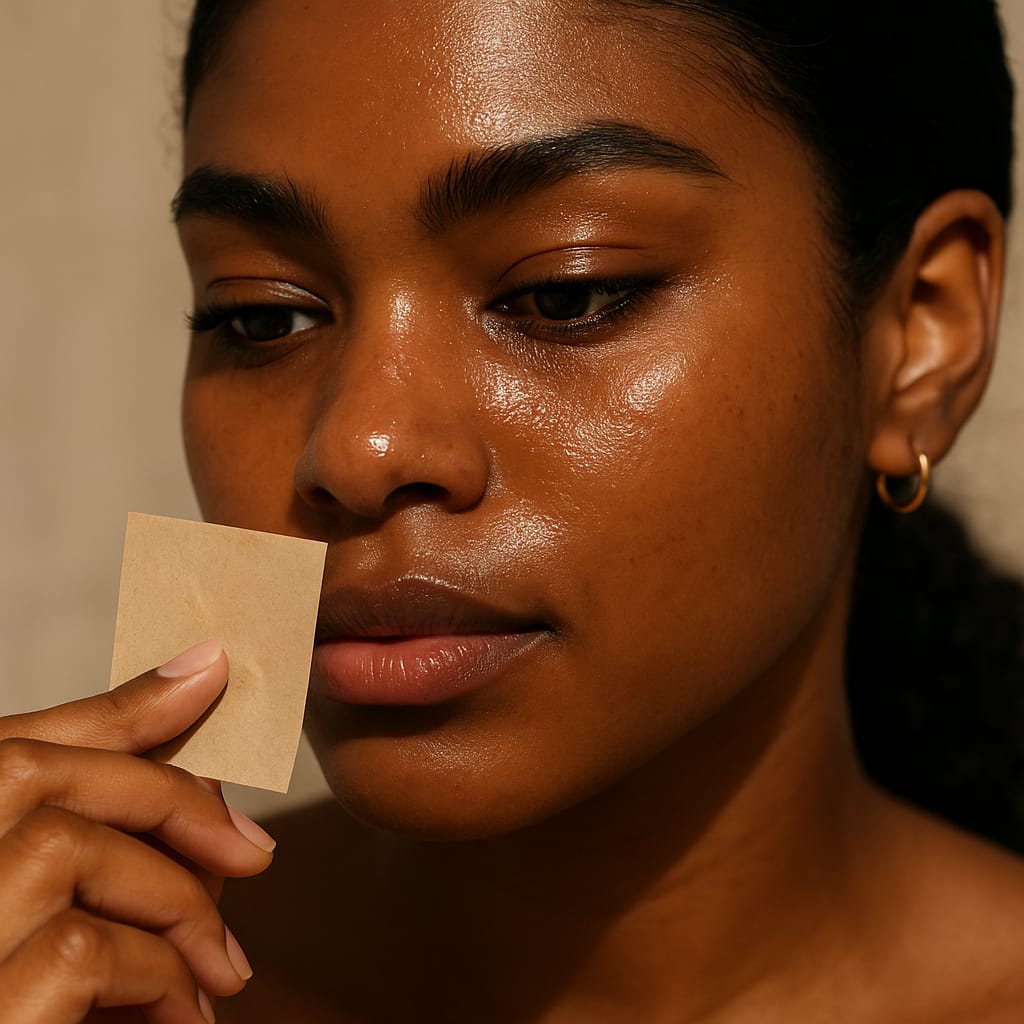
If your skin rarely becomes shiny and instead feels rough or tight, dryness may be the dominant concern. You can also check at midday with blotting paper to see where oil collects: mostly the T-zone suggests combination skin, while oil across the sheet suggests oily skin. Minimal oil typically indicates dryness. Observing these patterns across a few days helps you determine your skin type more accurately, especially if your skin behaves differently depending on weather or activity levels.
How to Tell the Difference Between Sweat and Oil
A lot of people mistake sweat for oil, especially in warmer weather, but they’re not the same thing. Sweat is water-based and appears when your body is cooling itself down. Oil (sebum) is produced by your sebaceous glands and tells you how oily or dry your skin naturally is. Knowing the difference helps you determine your skin type more accurately.
Sweat:
• Looks like tiny water droplets
• Feels watery or damp
• Evaporates quickly
• Doesn’t make the skin look shiny in the same way oil does
• Usually appears around the hairline, upper lip, temples, chest, under-eyes, and sides of your face
Oil (Sebum):
• Looks shiny and reflective
• Feels slick, greasy, or slippery
• Stays on the skin instead of evaporating
• Appears mostly in the T-zone (forehead, nose, chin)
• Shows up on blotting paper as a translucent stain
The easiest test:
Press a blotting sheet or tissue onto your skin.
– If it feels wet or damp but the paper dries without staining: sweat
– If it leaves a translucent mark that spreads: oil
If you’re testing your skin type during summer or after movement, make sure you’re not confusing sweat with shine. Sweat can make every skin type appear temporarily “oily,” so it’s best to observe your skin when you’re indoors, calm, and not overheated.

3. Pay Attention to Texture, Sensitivity, and Hydration
Determining your skin type isn’t just about how oily your skin feels, it’s also about texture, hydration, and how your skin responds to its environment. Dry skin typically lacks oil and can feel tight, rough, or flaky, while dehydrated skin lacks water. This is an important distinction, because it’s possible to feel greasy and dry at the same time. For example, someone might have an oily T-zone but still experience tightness or dullness due to dehydration. This often leads people to mislabel their skin type if they don’t take both oil and hydration into account; just a note for when trying to determine your skin type.
Sensitivity adds another layer of complexity. Sensitive skin reacts more easily to fragrances, harsh ingredients, alcohols, or even temperature shifts. However, sensitivity isn’t a skin type on its own, it’s more of a condition that can affect any skin type. You might be oily and sensitive, dry and sensitive, or combination and sensitive. That’s why it’s so important to determine your skin type through observation over time rather than relying on how your skin feels in a single moment.
When you determine your skin type, go beyond oil production and think about how your skin behaves throughout the day and in response to certain products. Helpful signs to observe include:
- How your skin feels immediately after cleansing
- Whether certain ingredients sting, tingle, or burn
- If your skin gets red easily or feels inflamed
- Whether moisturiser soaks in quickly or sits on the surface
- If your skin feels tight even when it looks shiny
These small clues reveal a lot about how your skin manages hydration, oil production, and barrier function. Paying attention to them consistently helps you determine your skin type more accurately and holistically, so you can build a skincare routine that genuinely supports your skin’s real needs, not just how it looks on the surface.
4. Consider Environmental and Seasonal Changes
Weather can drastically influence your skin, and ignoring this makes it harder to determine your skin type accurately. In winter, cold air reduces moisture, indoor heaters dry out the skin further, and wind can weaken the skin barrier. Even naturally oily skin may feel dry or irritated during colder months. In summer, humidity increases oil production and sweat, making some people appear oilier even if they’re normally dry. That’s why it’s important not to immediately assume your skin has changed type, it might just be responding to its environment. Failing to account for these external changes can lead you to incorrectly determine your skin type.
It’s not just the seasons that affect your skin. Stress, hormonal fluctuations, poor sleep, diet changes, travel, and even climate shifts can all influence how your skin behaves. These changes are usually temporary, but they can make your skin look or feel dramatically different from its norm.
For instance, if you’re under a lot of stress or sleeping poorly, your skin barrier may weaken and become more reactive. Or if you’ve switched to a warmer climate, increased humidity might cause your skin to feel oilier than usual. None of these shifts mean your skin type has truly changed, they’re just temporary responses to new conditions. That’s why it’s so important to be mindful of these variables when you determine your skin type.
The key takeaway is this: watching how your skin behaves across different environments, routines, and stress levels helps you determine your skin type more reliably. You may be naturally combination, but intense heat makes you oilier, while cold weather brings out dryness. These fluctuations are normal and expected. They don’t redefine your skin type, they reveal how flexible your skincare routine should be. Recognising the difference between a skin condition and your underlying skin type is one of the most helpful things you can do when trying to determine your skin type.
5. Evaluate How Your Skin Responds to Products
Your skin’s interaction with skincare products can reveal clues about its type. Pay attention to how your face feels after applying basic products like moisturisers or cleansers to help determine your skin type:
- Moisturiser Absorption: If your skin quickly drinks up moisturiser yet still feels tight or dry, it likely means your skin is craving more oil, a hallmark of dry skin. In other words, skin that remains parched even after moisturising often lacks sufficient natural oils (lipids). You may apply lotion and find it vanishes immediately, with your face feeling rough or flaky again soon after. This is a sign that your moisture barrier needs richer, oil-based products to supplement it.
- Shine and Heaviness: If even a lightweight moisturiser feels heavy or leaves you shiny, your skin probably produces plenty of oil on its own. Oily skin types often experience a greasy shine shortly after moisturising or cleansing. For example, you might use an oil-free gel cream but notice your forehead and nose look slick within an hour. Your skin may do better with very light, non-comedogenic lotions, as richer creams can sit on the surface and make you look greasy.
- Reactivity to New Products: If your skin often stings, turns red, or breaks out when you try new products, you may have a sensitive skin trait. Signs of sensitivity include quick irritation, itchiness, or small red bumps when introducing harsher ingredients. Always patch-test new skincare on a small area first if you suspect you’re sensitive.
Keep in mind that combination skin can show mixed reactions. You might notice, for example, that your T-zone (forehead, nose, chin) gets oily and shiny after moisturising, while your cheeks still feel dry. In contrast, if your skin feels perfectly comfortable (neither oily nor dry or irritated) with basic products, you could have a well-balanced “normal” skin typedermcenterofacadiana.com. Normal skin generally doesn’t over-produce oil or feel flaky; it tolerates most products without issues.
FAQ
Q: How long does it take to determine your skin type?
A few days of consistent observation is usually enough. You’re looking for patterns in oil, hydration, and texture. The bare-face test gives quick insight, but watching your skin throughout the day reveals the full picture.
Q: Can your skin type change permanently?
It depends on certain factors like: age, hormones, climate, and long-term skin barrier changes that can shift your natural type. However, temporary changes from weather or dehydration are more common.
Q: Can using the wrong products affect how you determine your skin type?
Yes. Over-exfoliation, harsh cleansers, or irritating ingredients can confuse the process by drying or inflaming your skin. A simplified routine helps reset your skin so you can observe its true condition.
Q: Do I need blotting paper to determine my skin type?
No, but it’s helpful. Tissue also works, but blotting paper shows more accurate oil distribution, especially for oily or combination skin.
Q: Is sensitive skin a skin type?
Not on its own. Sensitivity is a trait that exists within any type. You can be dry-sensitive, oily-sensitive, or combination-sensitive.
Q: Why does my skin behave differently in winter and summer?
Cold weather reduces moisture and weakens your barrier, while heat and humidity increase oil and sweat. Both seasons influence how your skin feels, but they don’t always indicate a permanent change.
Q: Can I have oily skin but still be dehydrated?
Yes. Oily and dehydrated skin lacks water, not oil. This is extremely common and often leads to misdiagnosis when people assume tightness means dryness.
What’s next?
Now that you know how to determine your skin type, you can start building a routine that supports your skin’s actual needs. Begin with the basics: a gentle cleanser, a moisturiser that aligns with your skin type, and a sunscreen that feels comfortable daily (you can check out the post I linked in section 1 that breaks this down in detail). Once your skin feels stable, you can add actives slowly, depending on your goals. Knowing how to determine your skin type makes it easier to avoid products that might overwhelm your skin and focus on those that help it function at its best.
Disclaimer
I’m not a dermatologist, esthetician, or medical professional. These recommendations are based on my personal experience and further research. Always patch test new products and consult a professional for personalised advice.


Pingback: Save Money on Skincare in 2026: 7 Products I Stopped Buying - rnworld