
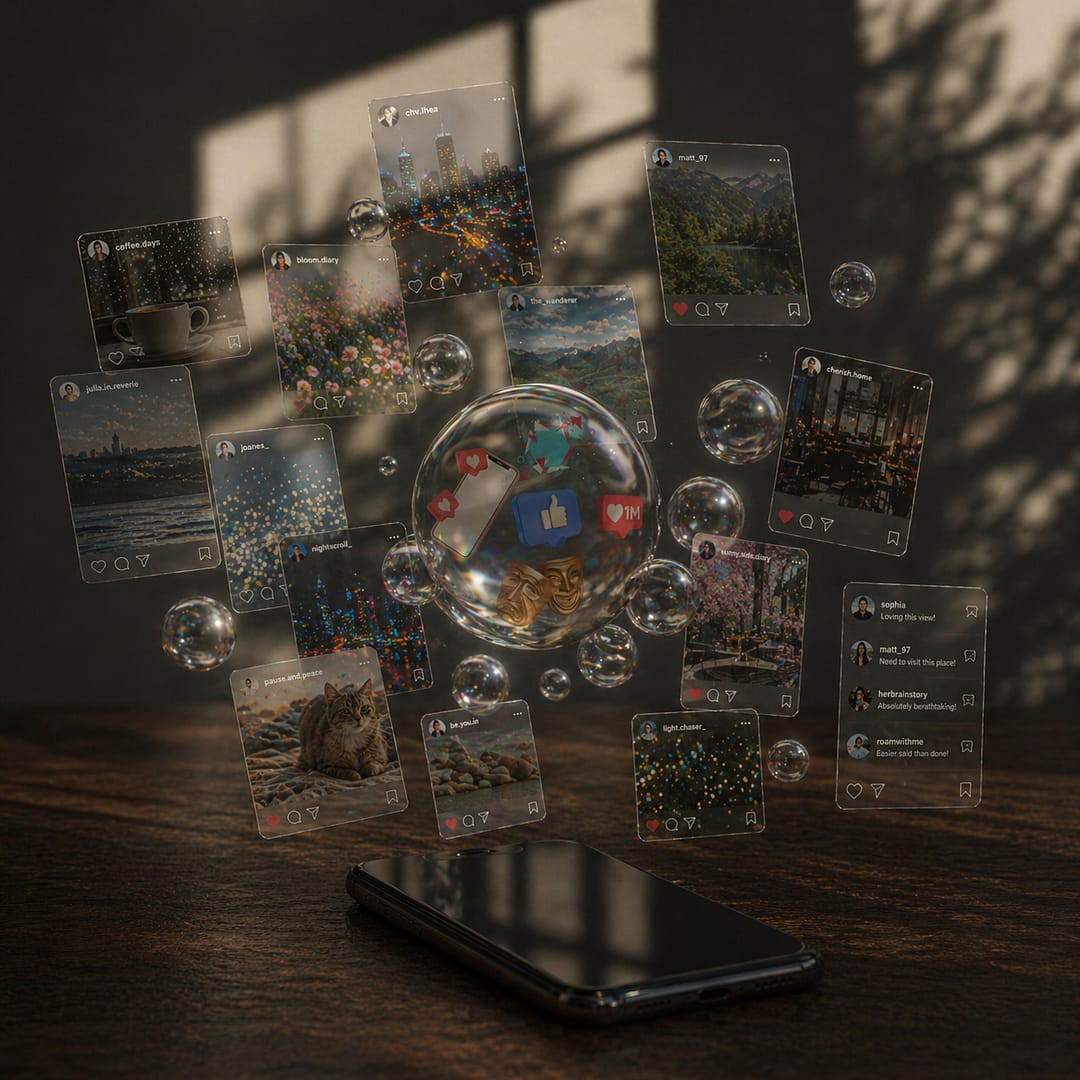
In 2026, more people are starting to notice something they can’t fully explain. Nothing looks obviously wrong, and yet something feels slightly off. You scroll through social media, and instead of feeling connected or inspired, there’s a quiet sense of distance that lingers in the background.
That’s where the question begins to form.
Why social media feels fake isn’t just about filters or curated posts anymore. It’s about the growing gap between what you see online and what actually feels true in your own life. Even when you know that content is edited and selected, it still influences how you think and how you interpret your own experiences.
Over time, this creates a subtle disconnection. You begin to notice that your reactions are shaped by what you’ve consumed, your opinions feel less certain, and your thoughts are often interrupted by something you’ve already seen. Understanding why social media feels fake starts with recognising that it’s not just the content that feels off, but the way it interacts with your thinking.
Guide Overview
To understand why social media feels fake, you have to look beyond surface-level explanations and into how constant exposure affects your internal processing. This isn’t just about unrealistic standards or misleading content. It’s about how quickly your thoughts are replaced by external perspectives before they have time to develop.
This guide walks you through the process of recognising those patterns and rebuilding clarity. You’ll learn how to pause before seeking answers, how to question what you consume, and how to create space for your own thoughts to exist without interruption. When you understand why social media feels fake at a deeper level, it becomes easier to engage with it without feeling disconnected from yourself.
Table of Contents
1. Notice How Often You Look for Answers Before Forming Your Own Thoughts
One of the reasons people don’t talk about enough when it comes to why social media feels fake is how it quietly changes your relationship with your own thinking. Instead of allowing your thoughts to develop naturally, the instinct is to search for answers almost immediately. You open an app, type something in, and within seconds you’re exposed to opinions that sound confident and complete.
I’ve done this myself more times than I can count. I would watch a movie, form a thought or interpretation, and almost instantly feel the need to check if anyone else saw it the same way. It wasn’t even about curiosity at that point. It was about validation. I wanted to know that my reaction made sense, that I wasn’t the only one thinking it, and that what I felt was “right” in some way.
At first, this feels harmless. It can even feel grounding to see your thoughts reflected back at you. But over time, it creates a pattern where your own perspective doesn’t feel complete until it’s confirmed externally. Your thoughts don’t fully form because they are constantly interrupted by what already exists.
You might notice that you rarely sit with uncertainty anymore. When something feels unclear, you resolve it by searching. When you have a question, you look for someone else’s conclusion instead of exploring your own. This is a key part of why social media feels fake, because your thinking becomes shaped by what is already out there rather than what you genuinely believe.
Rebuilding clarity starts with awareness. Notice when your first instinct is to search instead of reflect. Pay attention to how uncomfortable it feels to sit with a thought without immediately resolving it. That discomfort isn’t a problem. It’s where your ability to think independently begins to rebuild.
2. Understand How Repeated Content Reshapes What Feels Real
Another important reason why social media feels fake is the repetition of similar ideas. You see the same types of advice, the same messaging, and the same conclusions presented in different formats. Over time, this repetition creates the illusion of truth.
When something is repeated often enough, it starts to feel accurate, even if it’s incomplete or oversimplified. You begin to accept ideas without questioning them because they appear familiar. This shifts your perception of what is normal, and it changes how you interpret your own experiences.
This has become even more complex with the introduction of AI. We’re now at a point where it’s often difficult to tell the difference between what’s real and what’s not. Content can be generated, edited, and presented in a way that feels completely believable, even when it isn’t grounded in reality.
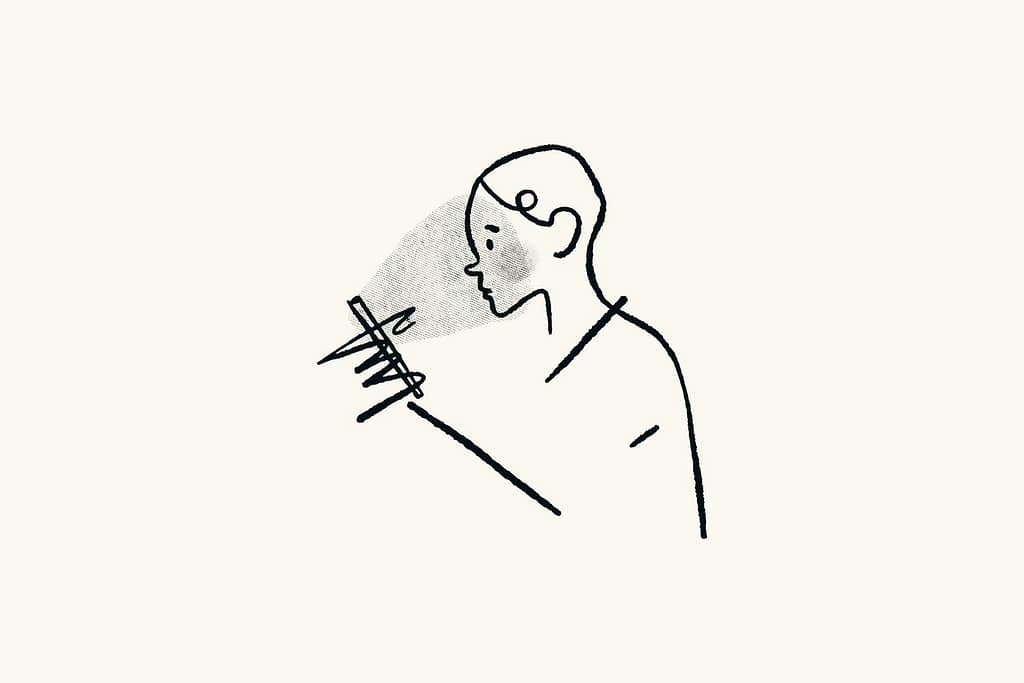
What makes this more unsettling is that our minds don’t fully register that difference. We still process what we see as if it’s real. We take in AI-generated content as a source of truth, whether that’s about what’s happening in the world or what something is “supposed” to look like. Over time, it can even become a reference point for how we see ourselves, without us realising where that standard came from.
You start comparing your life to what you see online without realising it. Your habits, your progress, and your emotions are measured against standards that were never consciously chosen. Even when you know that these standards are unrealistic, they still influence your expectations.
This shift is subtle but powerful. Your reality stays the same, but your reference point changes. That disconnect is a major part of why social media feels fake, because the version of life you’re exposed to doesn’t align with what you actually experience, yet it’s presented so consistently that it feels real.
3. Question What You Consume Instead of Accepting it Automatically
If you want to understand why social media feels fake, it’s important to look at how content is consumed. Most people scroll quickly, absorb information passively, and move on without questioning what they’ve just seen. Content is designed to be easy to understand and easy to agree with.
The problem is that not everything that sounds convincing is actually useful or accurate. When you don’t question what you consume, your perspective becomes a collection of ideas that haven’t been fully examined. This makes your thinking feel inconsistent because it’s influenced by multiple sources that don’t always align.
Questioning content doesn’t mean rejecting everything. It means pausing long enough to consider whether something makes sense for you. It means recognising that not every piece of advice is relevant and not every perspective needs to be adopted.
It means pausing to remember that a lot of what you see is only a few curated seconds of someone else’s life. Think of it like watching a teaser for a movie. When you actually watch the full film, it’s often completely different from the perception you formed based on the teaser. That’s because the movie is the full, real experience, while the teaser was curated to show you what they wanted you to see.
This shift is one of the most effective ways to address why social media feels fake. Instead of absorbing everything automatically, you become more selective. That helps you reconnect with your own thinking and reduces the influence of external noise.

4. Create Space for Depth, Not Just Input
Another reason why social media feels fake is because most of what you see is processed at a surface level. You move quickly from one piece of content to the next without fully sitting with anything long enough for it to feel real or complete.
This creates a pattern where everything feels slightly unfinished. You see a moment, a thought, or an opinion, but you don’t stay with it long enough to understand it fully. Over time, this makes your overall experience feel fragmented, which contributes to why social media feels fake in a way that’s hard to explain.
Creating space for depth means allowing yourself to stay with something longer than you normally would. Instead of immediately moving on, you let a thought, feeling, or idea develop fully. That shift brings a level of clarity because you’re no longer processing everything in fragments.
Creating space doesn’t have to be extreme. It can be as simple as stepping away from input long enough to notice what comes up naturally. Over time, this helps your thinking stabilise, which shifts why social media feels fake from something you feel passively to something you understand more clearly.
5. Strengthen Your Ability to Think Independently Through Small Decisions
Understanding why social media feels fake is only the first step. The next step is changing how you respond to it. The most effective way to do this is through small, consistent decisions that reinforce your ability to think independently.
Each time you form an opinion before reading others, you strengthen your own perspective. Each time you choose something based on your own preference instead of what’s trending, you reinforce your judgement. These actions may seem small, but they have a cumulative effect.
You don’t need to make dramatic changes nor stop social media use altogether. You just need to create moments where your thinking is not shaped by external input. Over time, these moments build confidence. Your perspective becomes clearer, and you rely less on what you see online to define how you think.
As this happens, your experience of social media changes. It no longer feels like something that controls your perspective. Instead, it becomes something you can engage with while still maintaining your own clarity; a tool. That shift directly addresses why social media feels fake, because you are no longer relying on it to define your understanding.

FAQ
Q: Why does social media still affect me even when I know it’s not real?
Even when you understand that content is curated, repeated exposure still influences how you think. Your brain responds to patterns and familiarity, so seeing similar ideas consistently can make them feel more real than they are. This is one of the main reasons why social media feels fake over time.
Q: Is it normal to feel disconnected after using social media?
Yes, it’s very common. Constant exposure to other people’s lives and opinions can create a gap between what you see and what you experience. This contributes to why social media feels fake, because your reality doesn’t match what is being presented.
Q: Does social media actually change how I think?
Yes, especially when content is consumed passively. Repeated exposure to certain ideas can shape your perspective without you noticing. This is a key part of why social media feels fake, because it blends multiple viewpoints into something that feels consistent but isn’t always accurate.
Q: How can I stop feeling influenced so easily?
You don’t need to eliminate influence entirely. The goal is to become more aware of what you consume and to question it when necessary. Creating space for your own thoughts helps you reduce the impact of external input and better understand why social media feels fake in your own experience. If you do feel like you need a break from everything, you can learn more about how to do so in my post How to Do a Digital Detox.
What’s next?
Once you begin to understand why social media feels fake, the next step is learning how to engage with it without losing clarity. This doesn’t mean avoiding it completely, but it does mean being more intentional about how you use it.
From here, you might want to explore topics like independent thinking, identity, and how to reconnect with yourself when everything feels overwhelming. If you want to understand this more deeply, you can explore the gap between Social Media vs Real Life and why that disconnect feels so strong.
Each of these areas helps you move further away from passive consumption and closer to a clearer understanding of your own thinking.
Because at the end of the day, why social media feels fake isn’t just about what you see. It’s about what happens to your thinking when you see it constantly.
And once you understand that, you can start to take that control back.


